The Jacksonville Port Authority (JAXPORT), an international trade seaport on the St. Johns River in Jacksonville, Florida, set a new port record today with the arrival of the ZIM vessel Kota Pekarang, the largest container ship to ever call Jacksonville.
The 11,923-TEU (container) vessel is operated by ZIM on a service offered by the 2M Alliance, comprised of Maersk, MSC, Hamburg Süd and strategic partners HMM and ZIM.
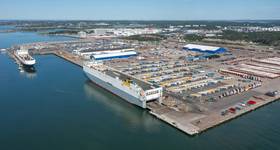
The Kota Pekarang, which transited the Panama Canal from Northeast Asia before reaching the U.S. East Coast, discharged and loaded cargo at JAXPORT’s Blount Island Marine Terminal.
This port call comes a little more than one month after the previous largest ship to ever call JAXPORT – the 11,000 TEU ZIM vessel Cape Sounio – docked at Blount Island on March 18.
JAXPORT anticipates increasingly larger vessels to call the port, driving the demand for deeper water from a harbor deepening project currently underway.
Jacksonville is Florida’s No. 1 container port complex by volume, offering worldwide cargo service aboard the world’s major shipping alliances with direct service to Asia, Europe, Africa, South America, the Caribbean and other key markets.