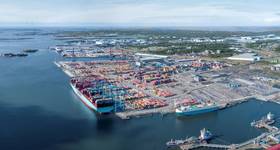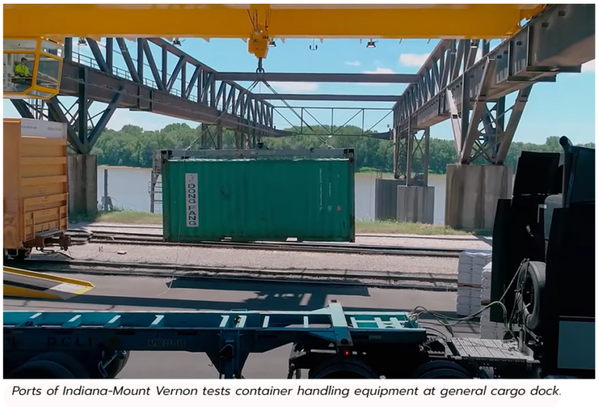
U.S. Customs and Border Protection (CBP) has approved a proposal from Ports of Indiana-Burns Harbor to establish the first international sea cargo container terminal on Lake Michigan. This would create the only all-water container route for ocean vessels to serve the greater Chicago metropolitan area via the Great Lakes.
The Burns Harbor terminal is located in northwest Indiana, inside the Greater Chicago Metropolitan Area and within sight of the Chicago skyline. It is part of the 25th largest U.S. port, which handles 25 million tons of cargo annually and generates $16.6 billion in annual economic impact. The Chicago metropolitan area is the third largest in the U.S. with a population of 9.6 million people and is home to the largest intermodal container market in North America. Currently all containers moving through the Chicago market travel by rail or truck.
“This is a critical step in a long process to establish a container terminal at Ports of Indiana-Burns Harbor and a new supply chain for international container shipments,” said Ports of Indiana CEO Jody Peacock. “Having an all-water container route into the Midwest could create transformational opportunities, but it will take time to develop. Our port has the capabilities to handle containers today, but we won’t be able to schedule regular container shipments until the Customs’ facilities are fully operational, potentially in 2026.”
“This new venture comes with major challenges and major opportunities, but our Ports of Indiana team has made this a top priority because we believe it is critical to providing Indiana with a modern port system,” said Ryan McCoy, port director at Ports of Indiana-Burns Harbor. “Great Lakes shipping is limited by a shorter shipping season and the use of smaller vessels, but the potential upside for handling containers is tremendous. Allowing ocean carriers to start serving this market could diversify supply chains, avoid bottlenecks and reduce the overall carbon footprint for shipping to and from the Midwest.”
Among U.S. Great Lakes ports, Cleveland and Duluth currently handle container vessels, while Monroe, Mich., is also pursuing CBP approval. Adding Burns Harbor to the list of Great Lakes container ports would allow shippers to utilize a network of container terminals which now includes the largest metropolitan area on the Lakes.
In support of this effort, Ports of Indiana has already garnered memorandums of understanding from potential partners as well as letters of support from other Great Lakes ports and more than 35 government officials, businesses and trade associations.