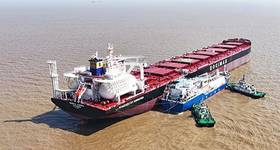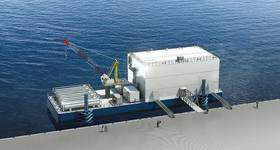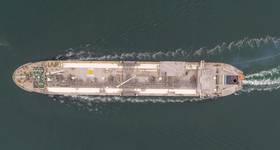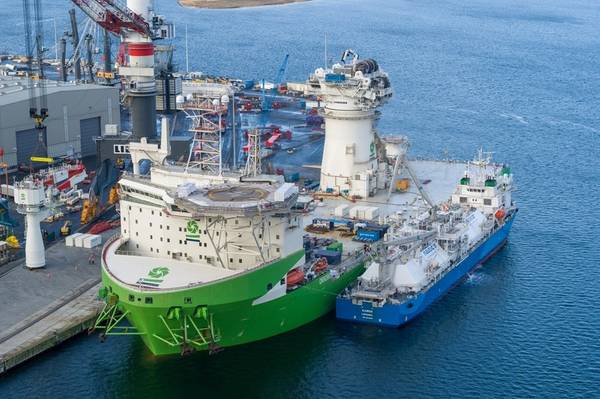
The world’s largest LNG bunker vessel ‘Kairos’, operated by Nauticor, has supplied DEME’s next generation offshore installation vessel Orion, this first such ship-to-ship bunker transfer at the Port of Rostock.
Orion is currently at the Liebherr construction yard in the Port of Rostock, where it is being outfitted with a 5,000-ton crane. The new offshore installation vessel is the fifth dual fuel addition to the DEME fleet, following three trailing suction hopper dredgers (Minerva, Scheldt River and Bonny River) and a cable laying vessel (Living Stone).
“Our recent fleet additions are unique in their market segments as the first vessels in our industry to run on LNG. We want to make sure our fleet is future-proof and exceeds the current environmental regulations. Therefore, most of our new vessels are equipped with dual fuel engines, which are
capable of running on LNG. Many of them are also already prepared for the new, carbon neutral fuels of the future and we will continue to scale up our actions to have the most energy efficient fleet in the industry,” says Bart Verboomen, Head of DEME’s Technical Department.