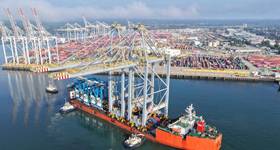
March imports dropped 26% at the Port of Los Angeles and 5% at the adjacent Port of Long Beach - the busiest U.S. sea trade gateways - as the novel coronavirus wrecked havoc on commerce around the globe.
Imports at major U.S. retail container ports are expected to hit their lowest level in five years in March and to remain significantly below normal through early summer as COVID-19 infections spread, according to the Global Port Tracker report released by the National Retail Federation (NRF) and Hackett Associates.
"The COVID-19 pandemic is unraveling the economy nationally and globally as most of the world moves toward a lockdown that entails the closure of significant portions of both the service and manufacturing industries," Hackett Associates founder Ben Hackett said.
The highly contagious virus that has killed more than 83,000 people worldwide was first detected in December in China, which shut down the world's manufacturing powerhouse for weeks in a bid to contain its spread.
As Chinese suppliers got back to work, the epicentre of the pandemic shifted to Europe and the United States, prompting authorities there to shutter non-essential businesses.
"With uncertainty about the length of the lockdown and extent of the pandemic, the second half (of the year) may not be in better shape," Hackett said.
(Reporting by Lisa Baertlein in Los Angeles Editing by Sonya Hepinstall)