MacGregor Develops Cargo System for MSC Boxship

September 9, 2019

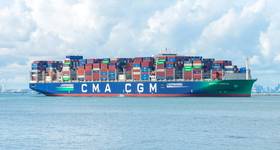
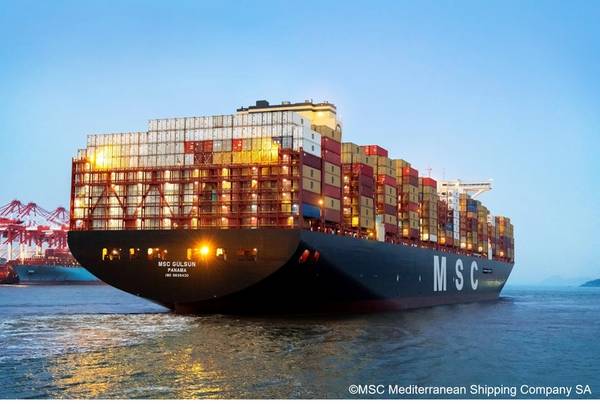
MacGregor has built a new cargo system for one of the world’s largest container ships, the MSC Gülsün. (Photo © MSC Mediterranean Shipping Company SA)

Cargotec company MacGregor has developed a new cargo system for one of the world’s largest container ships, the MSC Gülsün.

The ship was built by South Korean company Samsung Heavy Industries (SHI) and delivered in July of this year, having a capacity of more than 23,000 TEU, a length of 400 meters and width of 61.5 meters, and is the first of 11 ultra-large containerships MSC has on order, six of which are being supplied by SHI. Daewoo Shipbuilding & Marine Engineering will construct the other five vessels for MSC.

MSC Mediterranean Shipping Company Newbuildings leader Giuseppe Gargiulo said: “As our fleet grows and technology develops, we want to make sure that our strategic investments are focused on maximizing the ship’s performance. Through our close cooperation with MacGregor, we are able to develop new solutions that are of mutual benefit and help us to grow together.”


Logistics News

Turkey Tenders to Import 255,000 Metric Tons of Feed Barley

Turkey Tenders to Import 255,000 Metric Tons of Feed Barley

CK Hutchison Launches Arbitration over Panama Canal Ports Contract Ruling

CK Hutchison Launches Arbitration over Panama Canal Ports Contract Ruling

U.S.-Flag Shipping on the Great Lakes Down in 2025

U.S.-Flag Shipping on the Great Lakes Down in 2025

Port of Virginia Advances Capacity with Addition of ULCV Berth

Port of Virginia Advances Capacity with Addition of ULCV Berth

Subscribe for Maritime Logistics Professional E‑News

Video shows that IS militants with guns roamed the airport tarmac freely during Niger attack
Russian captain found guilty of crew member's death after US tanker crash
Walsh, IATA, says that the shortage of fuel and new aircraft puts IATA's emissions target at risk.