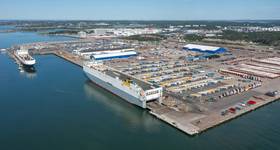
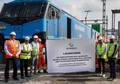
With the arrival of the MSC Trieste, Contship’s La Spezia Container Terminal (LSCT) greeted the maiden voyage of the “revised” Dragon/AE20 service from Asia operated by 2M joint partners, MSC and Maersk Line.
Like its predecessor, the service calls La Spezia as its first gateway port call in the West Mediterranean, taking advantage of the connectivity throughout Italy as well as southern Europe.
The number of port calls in the rotation has been reduced to improve schedule integrity and overall service efficiency. Built in 2011 and over 365m in length the MSC Trieste has a deadweight of almost 155,000 tons and a nominal capacity of 13,050 TEU.
Peter Hill, Group Sales & Business Development Director, commented: “We are very pleased the 2M Alliance has continued its commitment to LSCT and we are glad to welcome this ‘new’ service, now with a substantially increased move count. LSCT continues to be central to our customers’ networks, a clear sign of the strategic importance La Spezia has gained progressively over the years, not only for the domestic connectivity via rail, but with its expanding focus to southern Europe."
Peter added: "LSCT once again demonstrated its flexibility by worked throughout the Labour Day holiday to comply with the customers’ special request on this maiden call, to maintain the service schedule”.