The ports of Los Angeles and Long Beach Sign MOU to enhance competitveness.
The newly approved memorandum of understanding (MOU) is an opportunity to explore five areas of additional cooperation that will enhance competitiveness: cargo transfer predictability, digital connectivity, cybersecurity, establishing metrics and workforce development.
“Our two ports are the fastest way to move goods between Asia and U.S. markets and manufacturers,” said Port of Long Beach Executive Director Mario Cordero. “The kind of cooperation that will flow from this agreement ensures we will continue to be the most efficient gateway for shippers.”
“America’s two largest and most competitive ports have a long and successful history of collaborating on key issues,” said Port of Los Angeles Executive Director Gene Seroka. “This agreement significantly expands these efforts and underscores our shared commitment to lead and succeed.”
The nation’s largest seaport complex will work in concert with industry stakeholders to identify and address operational issues to unlock additional efficiencies and lower costs for shippers while improving sustainability, business continuity and security.
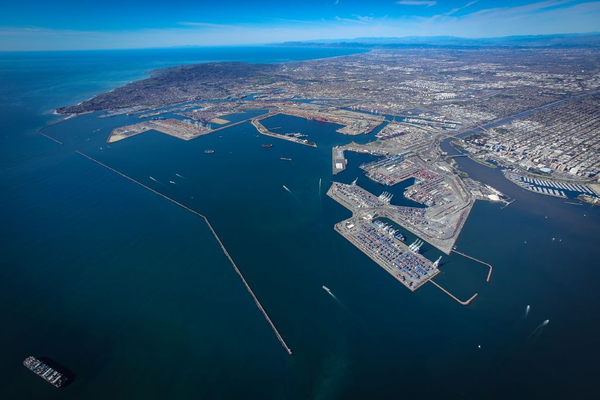
The two neighboring ports that share the San Pedro Bay move 37% of the nation’s containerized imports and 25% of its exports. More than 3 million jobs nationwide are connected to the complex. Meanwhile, the ports continue to face competitive challenges for market share.
“In today’s competitive environment, where cargo owners have more choices, the ports of Long Beach and Los Angeles are stronger when working together, collaborating with all of our labor, industry, environmental and community stakeholders,” said Long Beach Board of Harbor Commissioners President Bonnie Lowenthal.
The first steps will be for the staffs of the two ports to establish a work plan that will prioritize efforts, create work groups and define objectives for each of the areas outlined in the MOU. These efforts will be done in collaboration with stakeholders from marine terminals, labor, drayage, railroads, shipping lines, cargo owners and more.
The MOU is entered into pursuant to authority granted under Federal Maritime Commission Agreement No. 201219, which permits the ports of Long Beach and Los Angeles to collaborate on issues such as the environment, supply chain optimization and infrastructure development.
The Los Angeles Board of Harbor Commissioners approved the MOU on Feb. 20. The Long Beach Board of Harbor Commissioners approved the MOU on Feb. 24. Both votes were unanimous.