Port of Long Beach Chief Executive Jon Slangerup on Thursday unveiled ambitious plans for congestion-beating smart systems for cargo movement and an all-out push to achieve energy resilience for port operations with wind turbines, solar cells and other clean technologies, in his first-ever “State of the Port” address.
Speaking to a record audience of nearly 900 at the Long Beach Convention Center’s Pacific Ballroom, Slangerup summed up the Port of Long Beach’s achievements in 2014 then gave his expectations for 2015 and beyond, setting high goals for himself and the Port.
Slangerup’s address followed welcoming comments by Long Beach Mayor Robert Garcia, Harbor Commission President Doug Drummond and Harbor Commission Vice President Rich Dines.
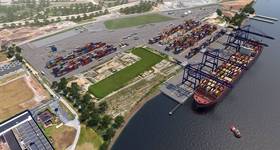
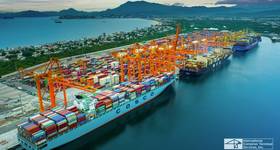
Appointed just last July, Slangerup said the Port is making tremendous strides in its efforts to compete with other seaports by modernizing terminals, roadways, bridges and railways, with its $4 billion capital improvement program this decade. The first phase of the $1.3 billion Middle Harbor Terminal Redevelopment project will be completed this summer and Port tenant Long Beach Container Terminal and its parent company Orient Overseas Container Line will begin operations this fall, increasing overall Port container capacity by 10 percent, while continuing to reduce air pollution with the terminal’s near zero-emissions operations.
Slangerup addressed congestion which has slowed cargo movement lately. He noted the reasons things have slowed down on the docks: Bigger ships, bigger alliances, chassis shortages, loading procedures, rail car shortages and labor negotiations all came together to cause the “perfect storm.”
“Congestion is the single toughest issue we face,” Slangerup said. “And if we don’t fix it immediately, we will drive business away permanently.”
One way to address the issue of improving cargo flow in the long term, Slangerup said, is to initiate a “smart system” that will provide all the links in the supply chain with the timely data they need to optimize efficiencies – from how ships are loaded to how cargo owners track the movement of their goods.
“We have a choice,” Slangerup said. “We can watch our business go elsewhere, or we can come together to change the way our supply chain works by using the latest information technology to efficiently move containers from origin, through the ports, aboard trucks and trains, and to their destination.”
Slangerup also brought forth his ideas for an “Energy Island” program to explore solutions to the Port’s increasing need for electricity. As the Port adds more and more zero-emission equipment, the need for electrical power grows. Energy Island is a concept that would bring sustainable power technologies into the Port, helping to satisfy Port needs and to serve as a resource to the community in emergencies.
Given the Port’s track record of success with its groundbreaking Green Port Policy -- which turns 10 years old this month -- Slangerup said the Port should aim high to make Energy Island a reality.
“Our Port has long demonstrated our ability to deliver economic growth and environmental stewardship. These are two faces of the same coin,” said Slangerup.