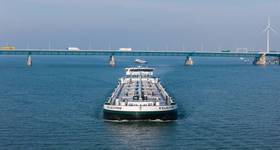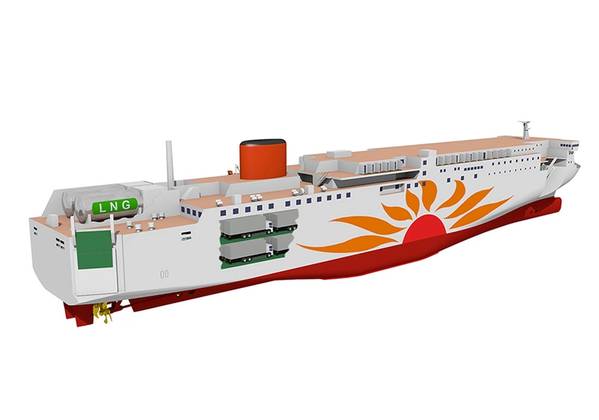
Mitsubishi Shipbuilding Co., Ltd. signed a contract with Mitsui O.S.K. Lines (MOL) to build two LNG-fueled ferries, the first such project in Japan. These vessels will be built at the Shimonoseki Shipyard & Machinery Works, with deliveries scheduled for the end of 2022 to early 2023. Ferry Sunflower Limited based in Oita, will operate the ferries on its Osaka-Beppu route.
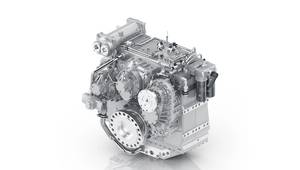
The ferries will be about 199.9m long and 28.0m wide, with gross tonnage of approximately 17,300 tons. They will have maximum prescribed capacity for 763 passengers, and carrying capacity for around 136 13-meter trucks and 100 passenger cars. The main power plant will be a high-performance dual-fuel engine able to operate on both liquefied natural gas (LNG) and A‐type heavy oil, the first for a Japanese ferry. These engines will provide exceptional environmental performance, with a 20% reduction in carbon dioxide (CO2) emissions compared to existing vessels and virtually eliminating sulfur oxide (SOx) emissions, reducing the environmental load.
Carrying capacity for trucks has also been significantly increased compared to existing vessels, with an expanded driver's lounge and more area per passenger. The ferries will meet the need for a modal shift in transportation and represent an evolution in casual cruising, with relaxed and open public spaces including an expanded bath and restaurant, and an atrium extending through three floors.