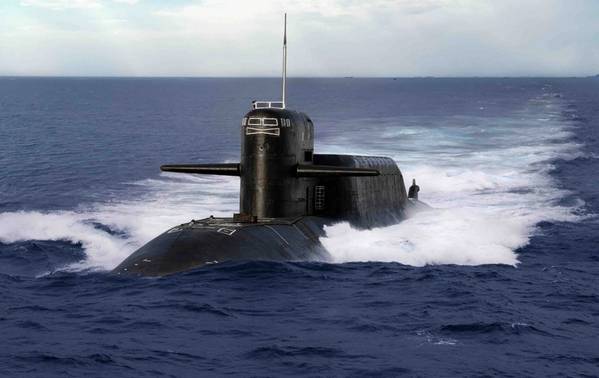
Introduction. Looking back at history one could argue that it was French author Jules Verne in his book “20,000 Leagues Under the Sea”, published in 1869, who was speculating about a new power source much in the same out of the box thinking that H.G. Wells employed when he wrote about inter-planetary flight in “War of the World’s. Verne was writing about “electricity” from batteries using seawater which he created after studying the model of the newly developed French Navy submarine “Plongeur” at the Exposition of 1867.
In the novel, Verne, speaking through the Nautilus’ Commanding Officer – Captain Nemo writes, “There’s a powerful, obedient, swift, and effortless force that can be bent to any use and which reigns supreme aboard my vessel. It does everything. It lights me, it warms me, it’s the soul of my mechanical equipment. This force is electricity.” Added Captain Nemo, “I owe everything to the ocean; it generates electricity, and electricity gives the Nautilus heat, light, motion, and, in a word, life itself.” In many ways using nuclear technology in a maritime environment flows the same way.
Nuclear power’s use in a maritime environment had an auspicious start when on August 3rd, 1955, US Navy Commander Eugene “Dennis” Wilkinson, during the maiden voyage of the first nuclear powered submarine, USS Nautilus (SSN-571), simply transmitted “Underway on Nuclear Power.” Wilkinson’s simple yet powerful message signaled the official start of nuclear power as a maritime fuel source. At approximately the same time the Soviet Navy was developing the November-class which was poorly designed and provided their crews little of the “safety shielding” that ensures crews are not exposed to large amounts of radiation.
This article discusses the unlocking of nuclear power for early maritime applications, lessons learned, today’s renewed interest by the Coast Guard in support of ship nuclear power and regulations, and the current maritime landscape that is poised to leverage industry innovations.
Maritime Nuclear History.
Military Safety Lessons Learned. Both the U.S. and U.K. navies have spent more than six decades running nuclear propulsion plants at sea, and one of the biggest lessons they’ve learned is that safety is not a set of procedures—it’s a culture. This is a core principle. Naval nuclear programs discovered early on that technical excellence alone isn’t enough; what keeps reactors safe is a system that relentlessly reinforces conservative decision‑making, rigorous training, and personal accountability. The U.S. Naval Reactors program institutionalized a “no‑fail” mindset where even minor anomalies are treated as signals to investigate, learn, and improve. In the U.S. Nuclear Navy pipeline this attitude is engrained from day one in a program administrated by the Naval Nuclear Power Training Command, whose “mission is to prepare safe and trusted Naval nuclear operators ready for follow on prototype training and, ultimately, service in the Fleet.”
Another major lesson is the value of a centralized authority paired with decentralized “vigilance” by the operators. Both the U.S. and U.K. navies maintain strict, top‑down oversight of design, maintenance, and operational standards. Additionally, the approach uses elements of Human Resource Management where operators are empowered, without question, to halt operations at the first sign of uncertainty. This approach is a core component of the way nuclear plants operate in both navies.
A third lesson is the importance of the Navy’s closed‑loop learning systems. The U.S. Navy’s Naval Reactors program, for example, maintains a comprehensive lessons‑learned process that captures data from thousands of reactor‑years of operation. Every incident, however small, is analyzed and fed back into training, design updates, and procedural refinements. The U.K. Royal Navy adopted similar mechanisms, emphasizing transparent reporting and cross‑fleet knowledge sharing.
Finally, both navies learned that human factors matter as much as actual engineering. Crew selection, continuous qualifications, fatigue management, and clear communication protocols are treated as safety‑critical elements. Peer‑reviewed research consistently shows that high‑reliability organizations, like naval nuclear programs, succeed because they invest as heavily in people as in technology. Together, these lessons have produced an unparalleled safety record: no reactor accidents and no radiological releases to the public from U.S. or U.K. naval nuclear propulsion plants.
What about nuclear icebreakers? In the past there have been parent craft designs of interest to the U.S. Coast Guard that passed initial alternatives analysis screening including a Russian vessel. However, additional studies concluded that a nuclear-powered icebreaker was not a cost-effective solution. The Commandant at the time, Admiral Karl Schultz, speaking at the Surface Navy Association national 2021 event, in response to a question about the 2019 White House mandate to consider nuclear-powered PSCs) said, “We’ve moved off the nuclear-powered breaker. That capability – the ability to operate that in the Coast Guard – that just doesn’t exist nor can we build out to that with all the demands on our plate” (Shelbourne, 2021).
According to an April 2025 article by Prabhat Ranjan Mishra, writing in Interesting Engineering, “Russia is expected to increase its fleet of icebreakers as there could be large-scale expansion of the Northern Sea Route for trade. Rosatom Director General Alexei Likhachev recently suggested that the number of icebreakers required will increase from 10 or 11 to between 15 and 17”. Likhachev made these comments during the 6th International Arctic Forum. Russia currently has 8 nuclear icebreakers.
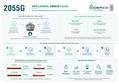
Floating Nuclear Power Plants. Growing interest in floating nuclear power plants reflects a broader shift in U.S. and international defense and maritime energy strategies. Reporting in The Telegraph noted that the British firm Core Power has engaged in discussions with the U.S. Department of Defense regarding a potential 300MW floating nuclear power plant deployable by 2028, intended to provide resilient power for AI-enabled military operations (Oliver, 2026). Such a system—far larger than typical microreactors—would be housed within a moored, ship-like platform capable of supplying uninterrupted electricity.
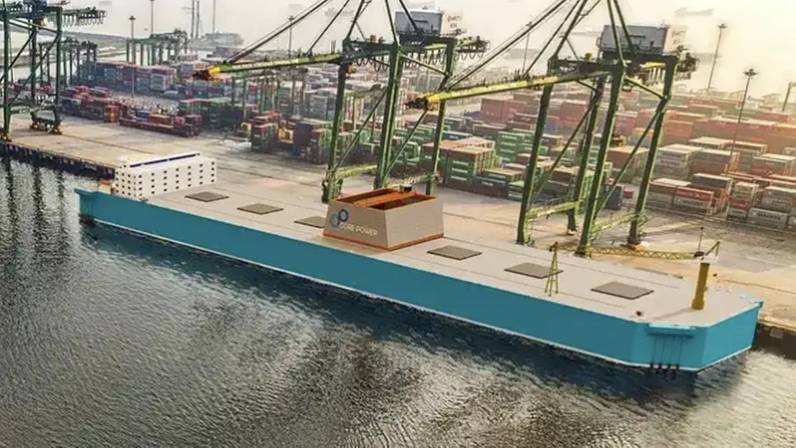 Figure 1 - Floating Nuclear Power Plants (FNPPs). Source: Core Power, https://www.corepower.energy/about/what-we-doParallel to this effort, the U.S. Army’s Project JANUS seeks to install small nuclear reactors at nine domestic installations, an initiative driven by Executive Order 14299, which directs the deployment of advanced reactors for national security purposes (U.S. Army, 2025). Site selection criteria included mission energy demand, resilience requirements, and environmental considerations. As Assistant Secretary Jordan Gillis emphasized, the Army intends to leverage its unique regulatory authorities to field secure, onsite nuclear generation that strengthens operational continuity (Nuclear Newswire, 2025).
These developments mirror trends within the global maritime transportation system. Core Power, in collaboration with the American Bureau of Shipping (ABS) and Athlos Energy, is evaluating the feasibility of floating nuclear power plants in the Mediterranean, building on ABS’s earlier publication of the first comprehensive classification framework for such platforms (ABS, 2024). Industry analysts suggest that small modular reactors (SMRs) deployed on floating platforms could enhance energy security, support port electrification, and provide low carbon power for industrial and datacenter operations (World Energy News, 2025). As ABS Chairman Christopher Wiernicki noted, floating nuclear systems may offer a viable pathway for reducing emissions while strengthening maritime energy resilience (World Energy News, 2025).
Collectively, these initiatives signal a significant evolution in how the Maritime Transportation System (MTS) may contribute to national and international energy strategies. The integration of floating nuclear power—whether for defense installations or civilian maritime infrastructure—positions the MTS as a potential hub for next generation, carbon free power generation with strategic, logistical, and geopolitical implications.
Nuclear Buoys. The Coast Guard has a long history advancing navigation technology with the deployment of visual and electronic aids to navigation. The early days saw gas powered lanterns, then batteries, solar power, incandescent to LED lamps, etc. --- these are representative of the incremental march toward more effective and efficient systems. Along the way some interesting ideas were experimented with. An example was the RDC Laser Range Lights evaluated in the 80s, to create a "line of light" for channel marking. Although a failed operating concept after experimentation, it was a fascinating spectacle to behold at night that cross-sound ferries used to augment their safe channel transits by steering to keep the beams overhead.
Another operating concept tested was the “atomic buoy.” Emerging technology, at the time, beyond civilian nuclear reactors, was the development of small radioisotope-powered electrical generators. The technology harnessed the thermal energy given off by the decay of radioactive elements. The generator converted the heat energy of the fuel to electrical energy to charge the battery. The opportunity of a stable, long-life power source, no moving parts, and maintenance-free operation for many years, made these “atomic” generators attractive for lighted navigational buoys (Hoppe, 2020). The return on investment was thought to be significant. Unfortunately, the technology demonstration found that the power loss from radioactive decay was more than had been expected and ultimately it was a failure, and the buoy was removed from Curtis Bay in 1966. The technical detail is fascinating and can be found in the Martin Marrietta Corporation report (U.S. Atomic Energy Commission, 1962) that describes the 10-watt Strontium-90 thermoelectric generator, shielding, and method of installation in the Coast Guard 8 x 26E light buoy.
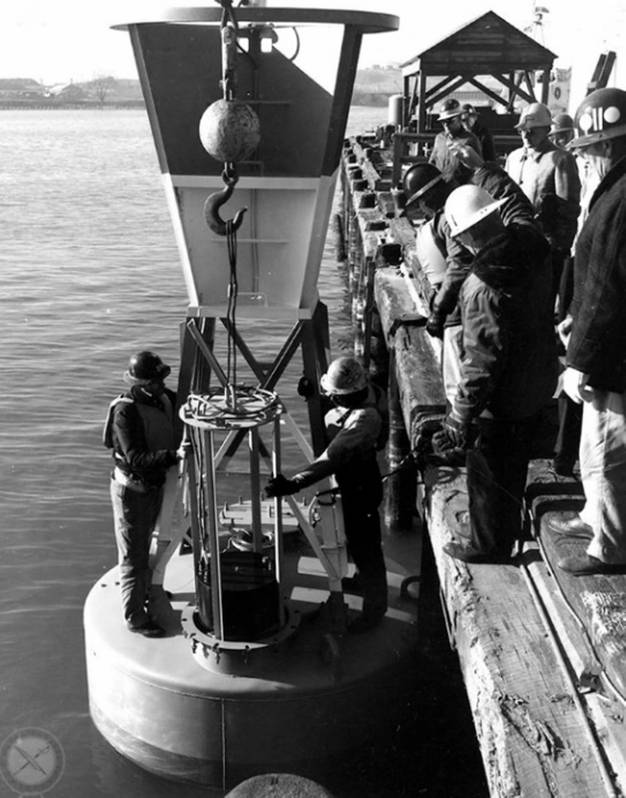 Figure 2. Batteries being loaded into the Atomic Buoy at Curtis Bay, Maryland, in December 1962. Source: U.S. Naval Institute Photo Archive
Similar technology was tested for a short time in 1964 to test the concept of a nuclear-powered lighthouse in Baltimore Harbor. The Canadian Coast Guard also experimented with nuclear-powered buoys in the 70s. They employed a similar approach for navigation aids, but they were eventually decommissioned. In the mid-1970s, the Russians made more use of Radioisotope Thermoelectric Generators for powering lighthouses and navigation beacons along the remote Northern Sea Route and are still addressing the repercussions of contamination situations. Of course, the audience should appreciate the state of mind our nation (and others) was in terms of eagerness to test out applications in the nascent atomic age.
Coast Guard Maritime Nuclear Policy.
This past November saw the standup of a Maritime Nuclear Policy Division at Coast Guard headquarters (MyCG, 2025). The Coast Guard Maritime Transportation System (MTS) missions include waterway management and safety, port and facility security, and prevention and response. The new office will serve as the center of gravity to develop and implement policies governing the safe and secure integration of nuclear technology into MTS. It supports the Executive Orders to reinvigorate the nuclear industrial base and restore America's maritime dominance by fostering innovation and ensuring the responsible development of advanced nuclear technologies within the maritime sector.
The international maritime community, led by the International Maritime Organization (IMO), is actively engaged in developing frameworks needed for the use of nuclear-powered commercial ships, including review and update of the outdated Code of Safety for Nuclear Merchant Ships (A.491 (X|I)) and SOLAS Chapter VIII This is one of the key focus areas of the new Coast Guard office. They are working closely with IMO, Classification Societies like ABS, and other stakeholders.
Maritime Nuclear Corridor. As part of the Atoms for Peace program there were other maritime technology demonstration projects that involved nuclear reactors on vessels like the NS SAVANNAH - the first (and still impressive) nuclear powered merchant vessel launched in service between 1962 and 1972. The NS stood for Nuclear Ship. This singular paragon of nuclear power for commercial ship propulsion was under U.S. flag registry. A few years after its decommissioning and in preparation for more nuclear-powered merchant ships, RDC sponsored a study (U.S. Coast Guard, 1976) to develop qualification requirements for engineering personnel. The report presented recommendations, based on functional task analysis, for training and other qualification requirements appropriate for personnel to serve on future commercial nuclear ships.
The first U.S. floating nuclear power plant was a converted WWII Liberty Ship called the MH-1A Sturgis. The U.S. Army did the conversion in 1964 as an experimental concept to create a mobile power plant.
Since that time there was little activity in commercial maritime nuclear vessel experiments. The emergence of new technology is attracting renewed interest. In addition, new operating concepts are being discussed. For example, the 2025 Memorandum of Understanding between the US and UK (MOU, 2025) announced an effort to "explore opportunities" for “potential establishment of a maritime shipping corridor between the Participants’ territories.” The operating concept is that maritime nuclear corridors would be created for regulated shipping routes specifically designed to facilitate the deployment of nuclear-powered commercial vessels and floating power units.
An MIT paper discusses the implications of this along with implementation challenges that include liability, regulatory gaps, and port infrastructure requirements (MIT Maritime Consortium, Ports, Infrastructure, and Safety, 2025). For example, ports supporting nuclear ships will need to incorporate radiation monitoring, decontamination, waste handling, and nuclear security. ABS has already issued rules for floating nuclear power plants and SMRs. The ABS Requirements for Nuclear Power Systems for Marine and Offshore Applications (ABS, 2024) were developed to provide requirements for design, construction, and survey for class review and approval of vessels having onboard nuclear power system installations.
Regulations. The new Coast Guard office will be responsible for developing policy, guidance, and pursuing regulatory changes to facilitate the safe and secure operation of Floating Nuclear Power Plants and Commercial Nuclear-Powered Propulsion vessels. This will include working with IMO to update the Code of Safety for Nuclear Merchant Ships (A.491 (XII)) and SOLAS Chapter VIII . The Coast Guard will have to lean heavily on partners including the NRC, DOE, DoW, Department of State, and other stakeholder agencies to define authorities and responsibilities related to the oversight of maritime nuclear projects.
Navigating the New Maritime Nuclear Opportunity
The New Maritime Landscape. The use of nuclear technology is more ubiquitous than most people think. For example, nuclear technology in space is important for both propulsion and ship/satellite electrical power. The same thermoelectric generator technology principles mentioned in the experimentation with atomic buoys are invaluable power for satellites and deep space probes. Coast Guard is not only a consumer of space products but already supports space activities. For example, the Coast Guard provides launch and re-entry security to maritime/coastal launches. The detection, tracking, and interdiction of suspicious craft above, below, and on the surface – whether a floating nuclear power plant or maritime space launch site, represent significant operational challenges. Response and recovery of sunken nuclear-powered vessels, barges, or nuclear enabled satellites to prevent radiation leakage also represent future operational challenges.
The emergence and trends being set by new technology including small modular reactors – then micro reactors are attracting many new application ideas. These smaller and simpler versions of power plants with state-of-the-art technology that promise fail-safe designs, less logistics, and all the benefits of long-lasting, zero emission technology will open new applications in MTS.
Figure 4 offers a depiction of the mix of current and future of maritime nuclear landscape. There is a clear nexus with Coast Guard regulations and protection of MTS that includes oversight and regulation of future nuclear navigation corridors, exclusion zone protection for maritime nuclear functions and activities, support of nuclear power for remote locations, casualty response, and safe port operations.
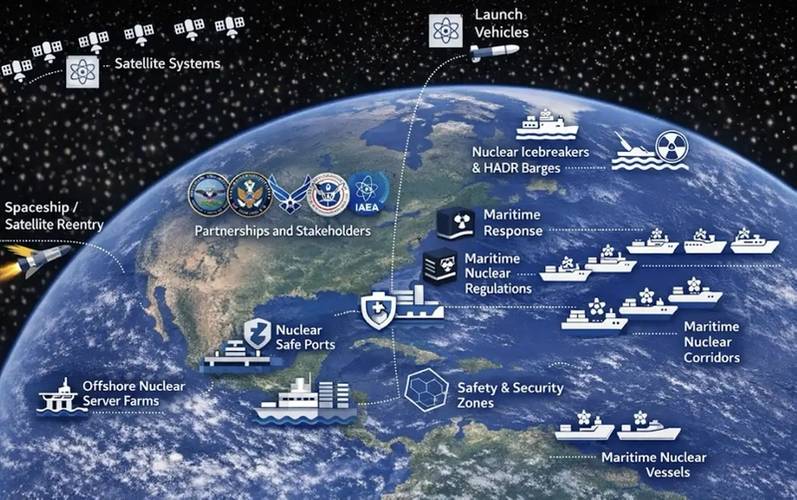 Figure 4. Notional Depiction of Maritime Nuclear and Nexus with Coast Guard.
Getting Ready. The RDC and Maritime Nuclear Policy Division are collaborating in hosting a joint DoW Lab Commander Sync workshop to bring together scientists and engineers from the Army, Navy, and Air Force labs to leverage their expertise. The workshops for these joint foresight events (this past March the Lab Commanders conducted a workshop on Alternative/Assured PNT) involve three questions. These are three possible questions:
Research Question #1 - How do we develop a unified risk framework to ensure the security and operational resilience of our nation's strategic seaports as they host advanced nuclear reactors? Our nation’s strategic seaports are critical, no-fail nodes for projecting Department of War (DoW) joint force power, serving as essential logistical hubs for Army force projection, Navy homeporting, and strategic airlift for the Air Force. The introduction of advanced nuclear reactors into these environments creates a complex, multi-domain risk. Currently, each stakeholder assesses this risk through a different lens. This question seeks to define a process for creating a unified risk framework, with the USCG as the key federal partner exercising its overarching authority for the safety and security of the Marine Transportation System (MTS), working alongside the DoW and other regulators to ensure the protection and uninterrupted resilience of these vital national security assets.
Research Question #2 - How will the Department of War (DoW), in partnership with the USCG and national labs, develop contingency response plans for novel nuclear technologies in ports that currently lack nuclear response capabilities? This question seeks to explore how DoW can leverage the expertise of the national labs and the operational authority of the USCG to co-develop new emergency response contingency plans, training protocols, and resource strategies, ensuring a robust and coordinated response capability is in place before these novel technologies are deployed.
Research Question #3 - What existing research initiatives, projects, or active programs by external organizations could be leveraged for collaboration? What types of Memoranda of Understanding (MOU) or partnership agreements could facilitate these collaborations?
In addition, the RDC and its new parent organization, Futures Development & Integration Directorate (FD&I), anticipate examining the Maritime Nuclear Domain as a future operating concept. If undertaken by FD&I it would involve a foresight assessment which typically includes looking out, up to 20 years at a prospective future operating concept that makes certain assumptions affecting the Maritime Nuclear Domain on the physical, technological, security, economic, geostrategic, and regulatory environment. The assessment continues with future challenges, ideal end states, followed by identifying key operational problems and capabilities needed to mitigate anticipated problems. This process would produce a Maritime Nuclear Domain Operating Concept that would describe future challenges and prospective solutions for experimentation and leadership validation to support future force design, requirements, or acquisitions.
The maritime nuclear landscape will likely change, not only how MTS operates in the future, but also how the Coast Guard operates to ensure the safety and security of the myriads of existing and new applications. Technology will no doubt have a role in solving future challenges and the Coast Guard’s RDC will continue to collaborate with its research partners to unlock these opportunities for Coast Guard application.
References
American Bureau of Shipping. (2024). Requirements for nuclear power systems for marine and offshore applications. https://ww2.eagle.org/content/dam/eagle/rules-and-guides/current/special_service/346-requirements-for-nuclear-power-systems-for-marine-and-offshore-applications-2024/346-nuclear-power-systems-reqts-oct24.pdf
American Nuclear Society. https://www.ans.org/news/2025-10-20/article-7468/armys-janus-program-to-boost-advanced-nuclear-reactors/
Blandford, E. D., & amp; May, M. M. (2012). Lessons learned from “lessons learned”: The evolution of nuclear power safety after accidents and near‑accidents. American Academy of Arts & and Sciences. https://www.amacad.org/sites/default/files/publication/downloads/lessonsLearned.pdf
Guimarães, L. L. S. (2014). Naval reactors safety assurance. International Journal of Nuclear Safety and Security. https://www.academia.edu/6096812/Naval_Reactors_Safety_Assurance
Hoppe, J. (2020). The Atomic Buoy Experiment. U.S Naval Institute. Naval History, Volume 34, Number 4.)
Martin Marietta Corporation. U.S. Atomic Energy Commission. Division of Reactor Development. (1962). Strontium-90 fueled thermoelectric generator power source for five-watt U.S. Coast Guard light buoy: final report.
MIT Maritime Consortium, Ports, Infrastructure, and Safety. (2025). Technology-Policy Handbook for Trans-Atlantic Nuclear Maritime Corridors.
MOU between the Government of the U.S. and the Government of the U.K and Northern Ireland Regarding the Technology Prosperity Deal Presidential Memoranda. (2025). (MOU, 2025)
MyCG. (2025). Coast Guard establishes Maritime Nuclear Policy Division. https://www.mycg.uscg.mil/News/Article/4358957/coast-guard-establishes-maritime-nuclear-policy-division/ (MyCG, 2025)
Nuclear Newswire. (2025). Army’s Janus Program to boost advanced nuclear reactors.
Oliver, M. (2026). British company in talks to build floating nuclear power plant for Pentagon. The Telegraph. https://www.telegraph.co.uk/business/2026/02/16/british-company-build-floating-nuclear-power-plant-pentagon
Shelbourne, M. (2021). Schultz: Nuclear Icebreakers Are Not An Option for Coast Guard. USNI News. https://news.usni.org/2021/01/13/schultz-nuclear-icebreakers-are-not-an-option-for-coast-guard
U.S. Coast Guard. (1976). Recommendations for Qualifications of Engineering Personnel of Nuclear-Powered Ships.
Senemmar, S., Jacob, R. A., Badakhshan, S., Rad, A. M., Dowling, M., Mukhi, S., Chow, J., Emblemsvåg, J., & Zhang, J. (2024). Navigating the future: Exploring small modular reactors in the maritime sector. IEEE Electrification Magazine, 12(4), 30–42. https://doi.org/10.1109/MELE.2024.3473190
U.S. Army Public Affairs. (2025). Army announces next steps on Janus Program for next-generation nuclear energy. https://www.army.mil/article/289074/army_announces_next_steps_on_janus_program_for_next_generation_nuclear_energy
World Energy News. (2025). Floating nuclear power plants to be evaluated for Mediterranean. https://www.world-nuclear-news.org/articles/fnpps-to-be-evaluated-for-use-in-the-mediterranean
Mishra, P. R. (2025). Russia eyes more 120 MW nuclear icebreakers to dominate icy Northern Sea Route, Interesting Engineering. https://interestingengineering.com/transportation/russia-to-increase-icebreaker-fleet
About the authors: Mr. Bert Macesker is the Executive Director of the USCG Research and Development Center and Dr. DiRenzo is the Partnership Director of the USCG Research and Development Center. Dr DiRenzo teaches for both American Military University and National University. Both are frequent contributors to Marine News.