Heavy Lift: RollDock and Roll-Lift Team Up
Posted by Eric Haun
January 11, 2017
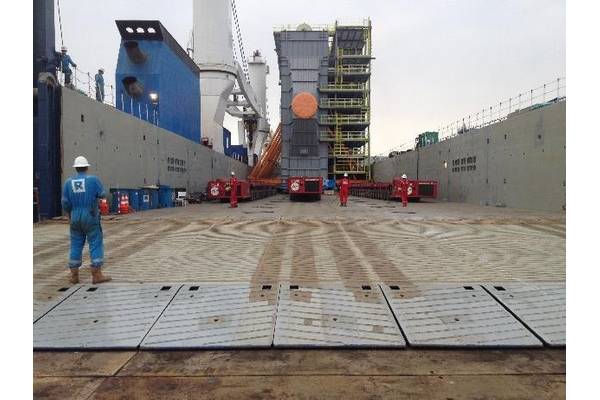
Photo: Roll Group
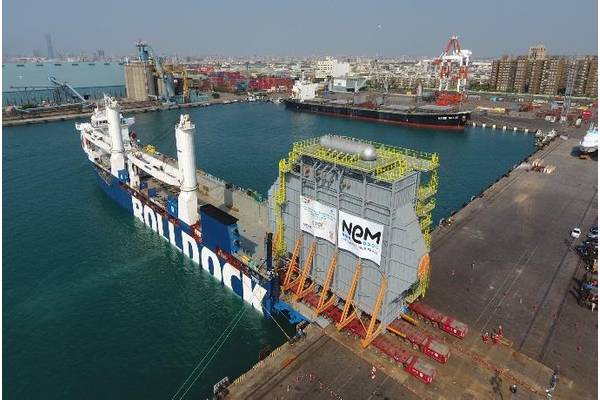
Photo: Roll Group
Having received a contract from NEM Energy BV for the transportation of two boiler blocks and two combustor units from Taiwan to Malaysia, Roll Group was called upon to put to work the combined capabilities of its in-house engineering department and experienced heavy transportation teams, enabling the group to offer a complete tailor-made solution by both land and sea.
NEM Energy BV involved the Roll Group at an early stage in the project, and the group’s engineers worked together with the NEM team to produce a precisely fitting sea fastening design which was integrated into the boiler block.
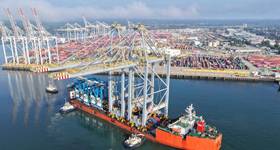
In total the group will transport two boiler blocks, each weighing nearly 2,000 tons, two combustor units, various air fan ducting structures and multiple steel frames. Because of the weight of the cargo, Roll Group engineers had to reinforce the loadout quay as in its original state the quay strength was insufficient to handle the load. For this, 150 pieces of steel beams were used, enabling the load to be spread over a larger area.
Roll-Lift used 72 axle lines of SPMT’s to roll the boiler blocks and combustor units on board the RollDock Sky. The vessel’s heavy lift cranes were used for the remainder of the cargo.