ECOsubsea, the Norwegian cleantech firm with a unique hull cleaning technology has won contracts to clean in North European ports of Antwerp and Zeebrugge thanks to the technology’s ability to remove all hull fouling from the water.
The technologically-advanced system has now been approved for use in the two North European ports following around 500 vessel cleanings in Southampton and Norway and its proven ability to meet strict environmental requirements.
Environmentally sound solution
While hull cleaning is an important part of vessel efficiency it has become mired in controversy due to the high risk of invasive species being easily transferred across the oceans and becoming an environmental and economic hazard.
Traditional hull cleaning methods include sending divers down under the vessel when alongside in port or at anchor with hull scrubbing technology. This method is being increasingly shunned due to detritus falling to a harbors’ seabed. Hard cleaning is also criticized due to the tendency to also remove layers of hull coating during the cleaning process.
Founded in Norway by award winning entrepreneurs Tor and his brother Klaus Østervold, ECOsubsea began making a name for itself with its attention to detail and meticulous effort to ensure the system was as sustainable and robust as possible, meaning it efficiently cleaned hulls but did not increase the risk of contaminated coastal waters.
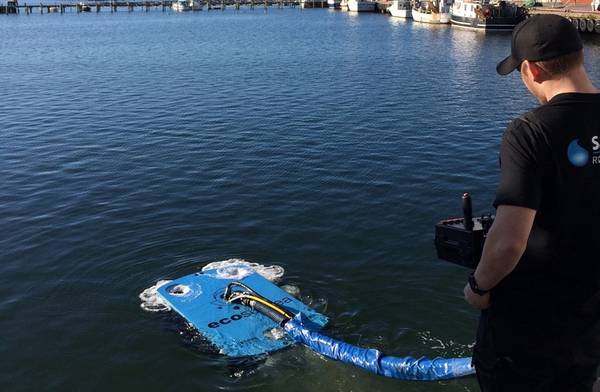
The unique ECOsubsea technology consists of a remotely operated vehicle that gently cleans the ship’s hull moving across the surface like a big lawn mower. It applies the latest technology in hull cleaning to carefully remove fouling build-up without causing any pollution.
It has been winning over ship operators and port authorities with its demonstratable ability to clean a hull efficiently, as well as simultaneously remove the fouling, pumping it ashore through a filtration process plant where it is stored in collection bags and later used in biogas production.
Operators such as Carnival, WWL Ocean and Hoegh Autoliners that have repeatedly used the ECOsubsea system over the last few years.
Port authorities are becoming increasingly concerned about the risks posed by shipping and what a vessel can and cannot discharge into local waters.
Increasingly, ports are taking a zero-tolerance approach, making it harder for owners to find an opportunity to ensure their vessels have clean hulls that help reduce fuel bills and CO2 emissions.