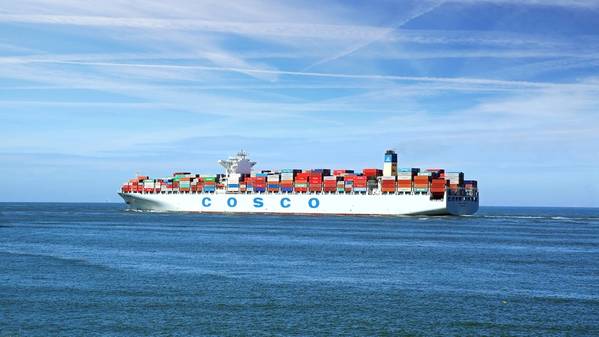
China's COSCO Shipping Group and the Dalian Commodity Exchange (DCE) have signed an agreement to jointly work on developing shipping derivatives such as container capacity futures, according to an article posted by the bourse on Thursday.
China's largest shipping line has been talking to the DCE for years about shipping futures. Their pact comes as a global shortage of containers—including on the key trade route from China to the United States—has led to high freight rates and as coronavirus curbs cause congestion at ports.
The strategic partnership will see COSCO and the DCE promote the establishment of delivery warehouses for a futures contract, said the article from official news agency Xinhua posted on the DCE's WeChat account.
A contract design for DCE container capacity futures has basically been completed and the contract will be a world first when launched, the report said, without specifying a targeted listing date.
It will provide companies with an "accurate and effective risk management tool and an open and transparent pricing reference" amid increasing demand for hedging, it added.
(Reporting by Tom Daly Editing by Mark Heinrich)