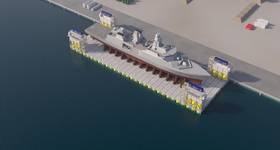
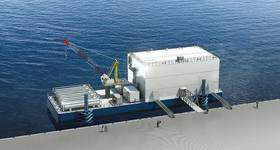
Singapore’s first liquefied natural gas (LNG) bunker barge scheduled to begin construction in January 2019. The 7,500 cubic meter capacity barge will be owned and operated by a joint venture between Shell and Keppel Offshore & Marine, FueLNG Pte Ltd, who selected ABS to class the vessel.
To help spur the project, Singapore’s Maritime and Port Authority (MPA) recently granted up to $3 million to FueLNG Pte Ltd to build the barge. The vessel will be based in the Port of Singapore and will supply LNG fuel to large oceangoing vessels throughout the region.
“This project is an important milestone for the region and is a key component of Singapore’s strategy to become the world’s largest bunkering port,” said ABS Vice President Global Gas Solutions, Patrick Janssens. “LNG as fuel has become an increasingly popular option for many shipowners looking to comply with environmental requirements and gain new operational efficiencies. Projects like this are critical to help expand the LNG supply chain and advance adoption of LNG as fuel.”
The LNG bunkering vessel will be built by Keppel Singmarine Pte Ltd for scheduled completion in the third quarter of 2020.