Cashman Wins $29 Million Contract for Baltimore Dredging

November 1, 2023

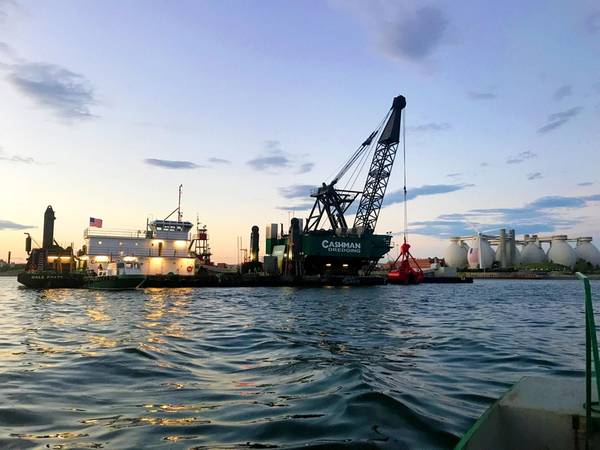
(File photo: Cashman Dredging & Marine Contracting Co. LLC)

Quincy, Mass. based Cashman Dredging & Marine Contracting Co. LLC, has secured a contract to perform maintenance dredging in Baltimore, Md.

The $29,131,250 firm-fixed-price contract was awarded by the U.S. Army Corps of Engineers' Baltimore District. Cashman was one of three bidders for the project.

The project, which involves the removal of 1,400,000 cubic yards (cy) from deep-draft federal navigation channels, is estimated to wrap up by March 31, 2024.

Dredging depth varies by channel segment and ranges from 35 feet mean lower low water (ft MLLW) to 50 ft MLLW with an additional 1 foot of allowable overdepth.

Approximately 1,000,000 cy will be dredged from the Maryland approach channels (Brewerton Channel Eastern Extension) and placed at the Paul S. Sarbanes Ecosystems Restoration Project at Poplar Island, while approximately 400,000 cy will be dredged from Baltimore Harbor channels (Curtis Bay Channel) and placed at the Cox Creek Dredged Material Containment Facility.

Logistics News

The Updated Maritime Labour Convention Highlights the Role of Women at Sea

The Updated Maritime Labour Convention Highlights the Role of Women at Sea

Wilson Sons Looks Forward to Rio Grande Container Terminal Expansion

Wilson Sons Looks Forward to Rio Grande Container Terminal Expansion

Cavotec Introduces Crane Operation Energy System

Cavotec Introduces Crane Operation Energy System

Inherited Ship Conditions Could Increase Litigation Exposure for Ship Managers

Inherited Ship Conditions Could Increase Litigation Exposure for Ship Managers

Subscribe for Maritime Logistics Professional E‑News

FAA claims it did not address warning signals prior to fatal collision
Data from traders and LSEG show that oil exports from Russia’s western ports rose in the first half of May despite drone strikes.
US moves to curb Ebola risks, saying immediate risk to the public is low