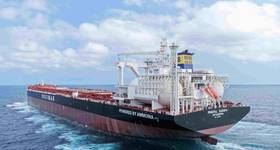
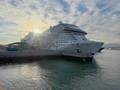
LNG Carrier CESI Tianjin Delivered for SINOPEC LNG Project
By Aiswarya Lakshmi
September 27, 2017
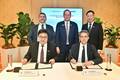
Mitsui O.S.K. Lines (MOL) announced that the LNG carrier CESI Tianjin, which was ordered by the joint venture of MOL, China COSCO Shipping Corporation Limited (China COSCO Shipping) and China Petroleum & Chemical Corporation (SINOPEC), was delivered at Hudong-Zhonghua Shipbuilding (Group) Co., Ltd. (Hudong) on September 26.
The CESI Tianjin is the fourth vessel to serve the LNG transport project for SINOPEC announced in April 2013, and will sail under a long-term charter contract to transport LNG that SINOPEC will purchase from the Australia Pacific LNG Project.
A total of six newbuilding LNG carriers are being built at Hudong. The first vessel, the CESI Gladstone was delivered in October 2016, the second, the CESI Qingdao in January 2017, and the third, the CESI Beihai, in June 2017. The remaining two are slated to be delivered by 2018.
MOL takes a proactive stance in acquiring new projects while newly leveraging this experience in international joint projects, and strives to offer value-added transport services to customers all over the world.