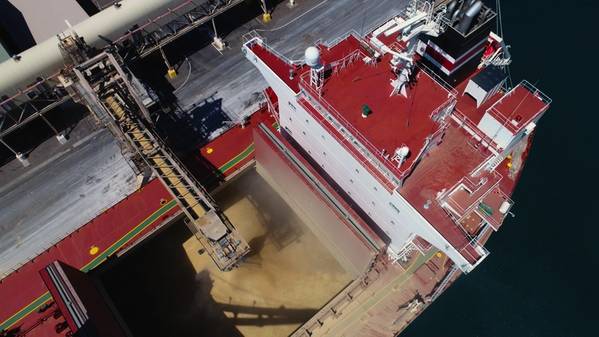
The Baltic Exchange's main sea freight index that tracks rates for ships carrying dry bulk commodities fell on Friday, registering its worst week in nearly three months, weighed down by weaker demand across vessel segments.
The overall index, which factors in rates for capesize, panamax, supramax and handysize shipping vessels, was down 84 points, or 5.4%, at 1,477 points.
The index, which fell for an eighth straight session, has lost more than 20% this week.
The capesize index slipped 215 points, or 8.2%, to 2,406 points.
Average daily earnings for capesizes, which typically transport 150,000-tonne cargoes such as iron ore and coal, were down $1,785 at $19,952.
China's iron ore futures posted their first weekly decline in three, pressured by rising portside stockpiles in the world's top steel producer and dimming global demand recovery prospects for steel products.
The panamax index was down 42 points, or 3.1%, at 1,323 points.
Average daily earnings for panamaxes, which usually carry coal or grain cargoes of about 60,000 to 70,000 tonnes, fell $380 to $11,906.
Among smaller vessels, the supramax index fell one point to 976 points, while the handysize index was flat at 599 points.
(Reporting by Brijesh Patel in Bengaluru; Editing by Vinay Dwivedi)