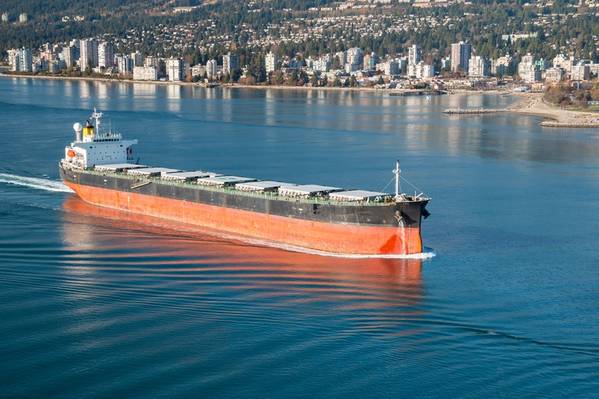
The Baltic Exchange's main sea freight index, tracking rates for ships carrying dry bulk commodities, rose for the fifth day this week, helped by higher rates for larger vessels.
The overall index, which factors in rates for capesize, panamax, supramax and handysize shipping vessels, was up 9 points, or 0.88 percent, at 1,032 points on Friday.
The capesize index gained 35 points, or 2.18 percent, at 1,637 points.
Capesize rates are ending the week on a much firmer note, with average earnings rising to about $13,000 per day as activity gains some traction in the Atlantic basin, Clarksons Platou Securities analysts said in a note.
Average daily earnings for capesizes, which typically transport 150,000-tonne cargoes such as iron ore and coal, were up $361 to $12,963.
The panamax index rose 10 points, or 0.87 percent, at 1,153 points.
Average daily earnings for panamaxes, which usually carry coal or grain cargoes of about 60,000 to 70,000 tonnes, increased $81 to $9,237.
Among smaller vessels, the supramax index was down 3 points to 764 points, while the handysize index fell 4 points to 478 points.
(Reporting by Karen Rodrigues in Bengaluru)