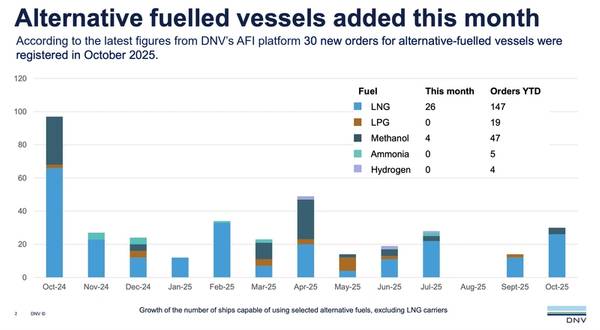
According to the latest figures from DNV’s Alternative Fuels Insight (AFI) platform, 30 new orders for alternative-fueled vessels were placed in October 2025.
Of these, 26 were LNG-fueled vessels, all coming from the container segment.
The remaining four orders were for methanol-fueled vessels, with three of these in the tankers segment.
A total of 222 orders for alternative-fueled vessels were placed in the first 10 months of 2025, just under half (52%) of orders placed in the same period in 2024. LNG-fueled vessels continue to dominate new orders, accounting for 67% of all alternative-fuel orders this year, with 147 ships. Methanol-fueled vessels follow with 47 orders, while LPG carriers (19), ammonia-fueled vessels (5), and hydrogen-fueled vessels (4) make up the remainder.
The container segment now accounts for 65% of all new orders for alternative-fueled vessels in 2025.
Four LNG bunker vessels and two bunker vessels capable of supplying methanol and biofuel were also added to the orderbook in October. Although these are not included in the alternative-fueled vessel statistics, continued investment in bunkering infrastructure is essential for supporting the growth and viability of the emerging alternative-fueled fleet.