APM Terminals Pipavav Welcomed Inaugural Container Train Service
Posted by Michelle Howard
March 27, 2017
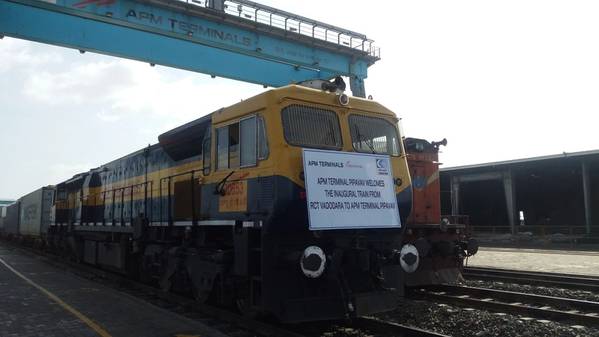
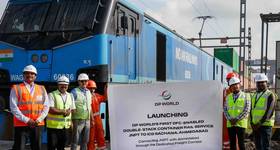
Photo: AMP Terminals
APM Terminals, Pipavav received the inaugural container train from Rail Container Terminal [RCT], Vadodara carrying Glass Materials, Syringes, Led Bulb, flexible intermediate bulk container [FIBC] Jumbo bags, Plastic Articles for export. Operated by Container Corporation of India [CONOCR], the inaugural trip of the container train service was welcomed by officials from Railways, CONCOR, APM Terminals and Liners.
Vadodara is the trade Center of western India having industries like Petrochemicals, Engineering, Chemicals, Pharmaceuticals, Plastics, IT and Foreign exchange services amongst others. It is also an important terminal for the Indian railways connecting Vadodara city with North, South and Eastern regions of the country. Through this service, customers in and around the city will get an option of movement of their cargos to and from Vadodara for their export/import with no pilferage in transit. This environmentally friendly mode of transport will bring operational efficiency along with decongestion of roads.
The current fortnightly service will be converted to a weekly service going forward.