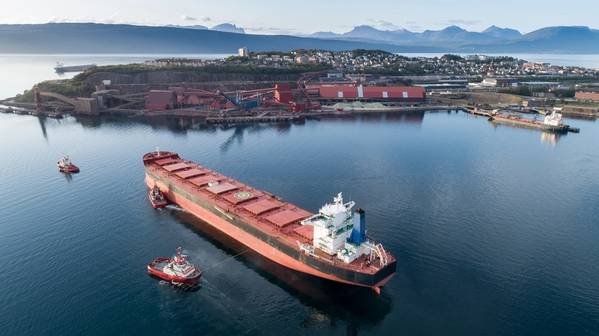
A new report offers safety recommendations for ship owners and port authorities seeking to establish green shipping corridors.
As the shipping industry continues to make progress toward its decarbonization goals, a number of green shipping corridors are being being set up as maritime routes that help to enable the use of low- and zero-emission lifecycle fuels such as methanol, ammonia and hydrogen, as well as other green technologies. To date, more than 30 green shipping corridors have been announced.
Safety concerns and considerations for establishing these green corridors are explored in a newly published report from the Maritime Technologies Forum (MTF), a forum of flag states and classification societies, established to provide technical and regulatory expertise to benefit the maritime industry.
The MTF’s study facilitates information sharing by creating a 24-point safety checklist spotlighting vessel and port, collaborative and technical considerations in the planning and assessment of green corridors.
"The majority of safety considerations for establishing green corridors are linked to the interface between the ship and the port," according to the MTF report. "To manage the additional safety hazards of alternative fuels, together with the lack of industry experience and detailed guidelines, specific risk assessments should be conducted for bunkering and port operations."
Based on the findings of the study, MTF has outlined the following recommendations: arrange early planning for safety assessments, conduct a risk assessment of port operations and bunkering, use available standards to ease future port acceptance, understand the risk to third parties in port, share information and emergency plans with intermediate states and develop and implement a safety management system (SMS) for alternative fuels.
Alf Tore Sørheim, Acting Director General of Shipping and Navigation at the Norwegian Maritime Authority, said, “There are many barriers to consider regarding the formation of green corridors, and safety must be at the forefront of these discussions. We should ensure that all stakeholders have access to our findings and a voice in the process so we can collectively address the challenges at hand.”
Tan Hoe Soon, Assistant Chief Executive (Corporate & Strategy) for the Maritime and Port Authority of Singapore, said, “The establishment of Green and Digital Shipping Corridors (GDSCs) with like-minded partners is a key enabler to accelerate the early adoption of alternative fuels. MTF’s study can support the ongoing work that port authorities are already undertaking, such as through the Port Authorities Roundtable on sharing the experiences that can inform the development of national standards and guidelines by the respective countries.”
The flag state administrations include Maritime Bureau, Ministry of Land, Infrastructure, Transport and Tourism, Japan; the Norwegian Maritime Authority; the Maritime and Coastguard Agency, United Kingdom; and the Maritime and Port Authority of Singapore (MPA). The classification society members are ABS, DNV, LR and ClassNK.