“Over the next ten years, from 2023 to 2032, more than 15,000 ships with deadweight capacity of more than 600 million tonnes are expected to be recycled, more than twice the amount recycled in the previous ten years,” says Niels Rasmussen, Chief Shipping Analyst at BIMCO.
As recycling volumes increase, it is increasingly important that the Hong Kong International Convention for the Safe and Environmentally Sound Recycling of Ships is ratified and implemented. The Convention was adopted in 2009 with the aim of reducing risks to human health, safety, and the environment.
“In fact, recycling steel in electric arc furnaces emits significantly less greenhouse gases than the production of crude steel, and as the electricity grid becomes decarbonized emissions will reduce further. Therefore, ship recycling can continue to play a key role in the circular economy,” says Rasmussen.
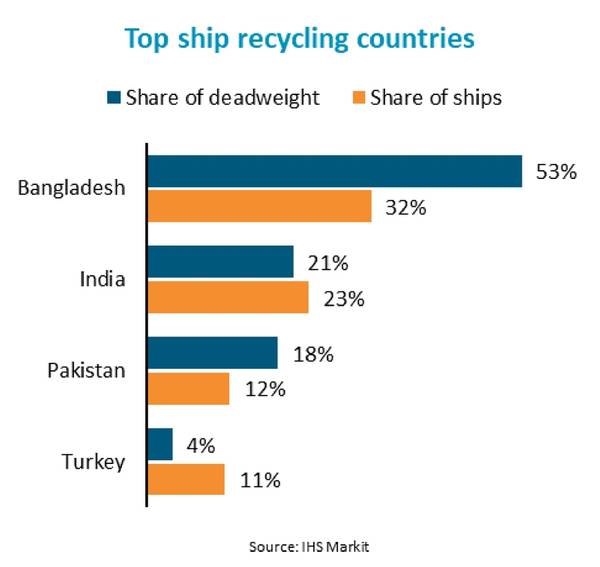
Fortunately, India and Turkey, which are two of the largest ship recycling countries, are also major steel producers with a high share of electric arc furnace use. During the past five years, these countries have recycled 25% and 34% of ship deadweight capacity and number of ships respectively. Along with Bangladesh, the world’s largest ship recycling country, and Pakistan, these top four countries have recycled 96% of deadweight capacity and 77% of ships during the last five years.
Over the past 10 years, 7,780 ships with a deadweight capacity of 285 million tonnes were recycled. Most of the deadweight capacity recycled (60%) was built during the 1990s. In the next ten years, ships built during the 2000s will be the main source of recycling.
Compared to the 1990s, more than double the deadweight capacity was built during the 2000s and will drive the expected increase in recycling. Deadweight capacity built during the 2010s increased by a further 65%, which could lead to even higher levels of recycling ten to twenty years from now.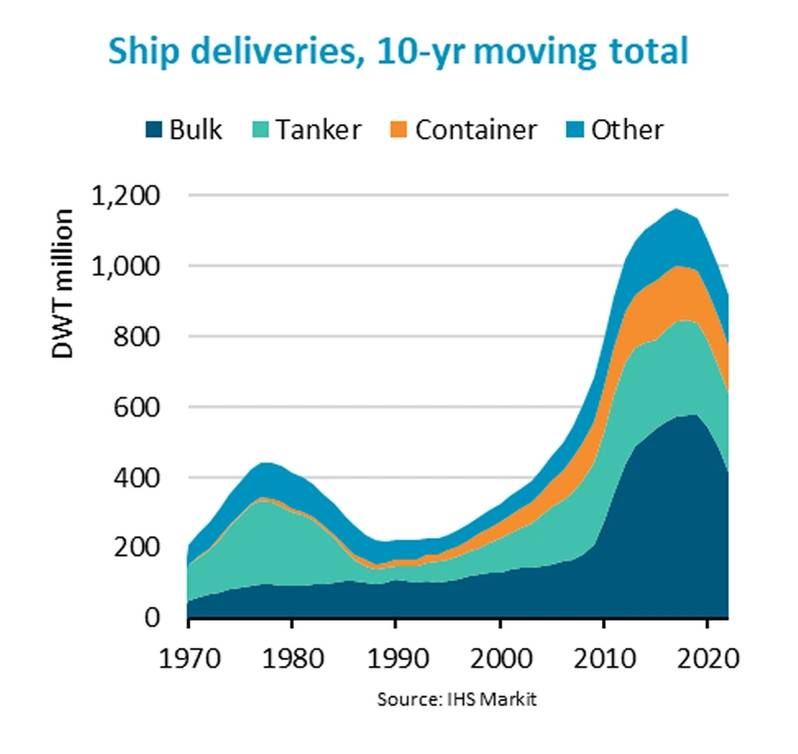 Chart courtesy BIMCO/IHS Markit
Historically about 50% of bulk, tanker, and container deadweight capacity has been recycled by the time the ships would have been 25 years old and 90% by 30-35 years old. If we apply this recycling pattern to the currently trading ships, we estimate that 15,000 ships and 600 million deadweight tonnes will be recycled between 2023 and 2032.
“Many older ships are expected to be recycled earlier than normal due to the ever-tighter limits on greenhouse gas emissions. More than 15,000 ships and 600 million deadweight tonnes are therefore expected to be recycled between 2023 and 2032,” says Rasmussen.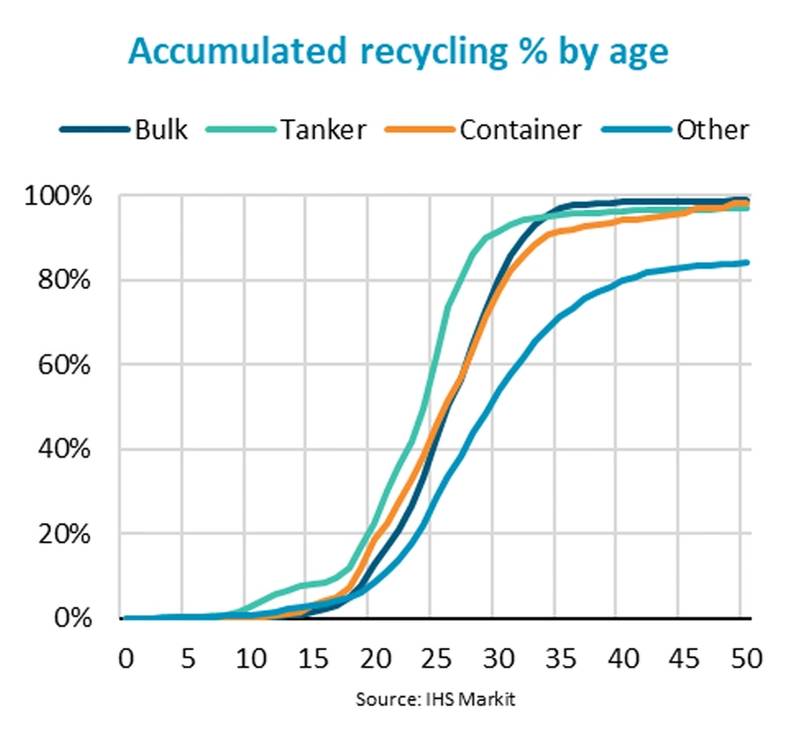 Image courtesy BIMCO/IHS Markit