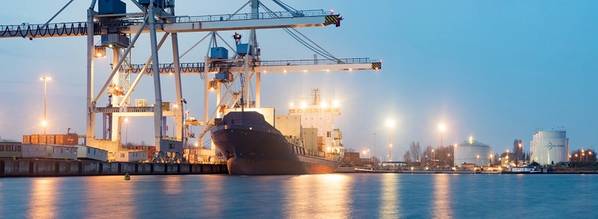
Philippines-based port operator International Container Terminal Services Inc. (ICTSI) will more than double the capacity of its container terminal in Congo as part of a $100 million expansion, the company said on Thursday.
Located on the Congo River, the port city of Matadi, where ICTSI operates the Matadi Gateway Terminal (MGT) under a joint venture with Congolese property management company SIMOBILE, is the Democratic Republic of Congo's primary shipping hub.
The planned expansion will bring MGT's throughput capacity up to 400,000 containers annually.
Upgrades include an extension of the quay from 375 meters to 500 meters, a doubling of the terminal yard area and the acquisition of new equipment.
Plans to implement a public private partnership from next year to dredge the Congo River to a depth of 12.5 meters should lower marine freight rates and increase Matadi's competitiveness, ICTSI said.
With a portfolio largely focused on emerging markets, ICTSI operates ports across Asia, Australia, the Americas and Africa, where, in addition to its Congo port, it also runs a container terminal in Madagascar.
(Reporting by Joe Bavier; Editing by Elaine Hardcastle)