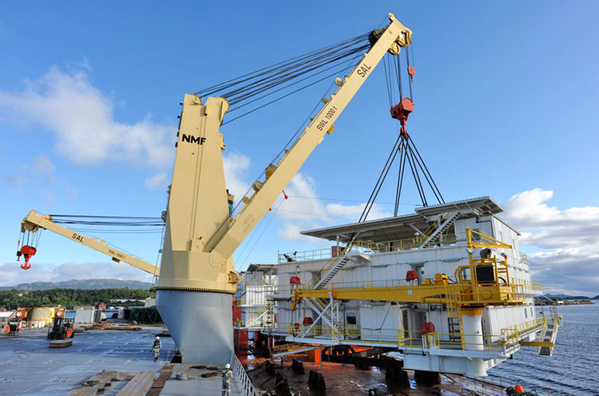
SAL Heavy Lift recently transported two living quarter modules from the fabrication yard in Stord, Norway to their destination in Onne, Nigeria.
In addition to the sea transportation of the modules, SAL arranged a multi-modal pre-carriage from the manufacturer to the berth where MV “Lone” loaded the Living Quarters.
For the pre-carriage, SAL and Norwegian agents Alex Birger Grieg mobilized a 9,000 mtons dwt flat top barge which was towed from Stavanger by a 50 tbp tug to the fabrication yard’s load out quay, which is inaccessible for ocean carriers. SAL’s scope then continued by rolling the modules with SPMT’s onto the barge, upon which the seafastening was carried out.
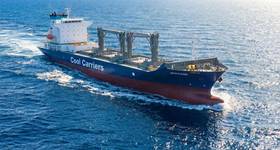
Following that, the barge with the Modules on board was towed to the deepwater quay where MV “Lone” loaded each module weighing 661 and 593.5 mtons in a single lift by means of her 1,000 mtons SWL cranes.
After a transit time of only 11 days, MV Lone arrived in Onne, Nigeria, where the modules were discharged into two receiving barges for later installation in the shipyard.