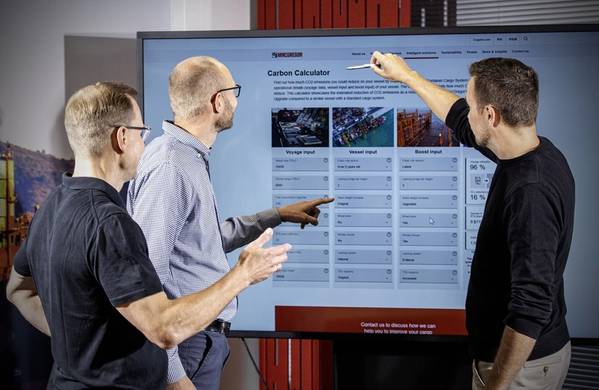
MacGregor, part of Cargotec, launched a new free digital Carbon Calculator to help container shipping companies estimate the carbon dioxide emissions they can eliminate by upgrading their onboard container cargo system with MacGregor Cargo Boost.
By maximizing container-carrying capacity on board existing ships, the Cargo Boost solution has been shown to increase average cargo system utilization from conventional rates of 80% to 90%, or even 100%. Across a 10-vessel fleet this can increase capacity by the equivalent of an additional ship. At no cost, the MacGregor Carbon Calculator offers owners a straightforward tool to estimate the emissions-reducing potential of Cargo Boost in advance.
The new calculator allows users to enter details of the vessel, the existing container cargo system and changes with Cargo Boost implemented, and operational details of a voyage. Offering full transparency, it estimates the impact of upgrading in terms of the percentage CO2 reduction per twenty-foot equivalent unit (TEU), savings in Emissions Trading Scheme (ETS) payments and fuel costs in US dollars per TEU, as well as additional revenue in USD.