Investigators Blame Norway Helicopter Crash on Gearbox Failure
Posted by Eric Haun
June 28, 2016
The fatal crash of an Airbus helicopter in Norway in April was probably the result of metal fatigue in the aircraft's gearbox, the country's Accident Investigation Board (AIBN) said in a preliminary report on Tuesday, backing earlier findings.
All 13 people on board were killed when the Super Puma's main rotor blades separated from the aircraft as it was ferrying passengers from a Norwegian offshore oil platform operated by Statoil.
The European Aviation Safety Authority on June 2 grounded H225 LP and AS332 L2 Super Pumas following the discovery of metal fatigue in the gearbox of the crashed helicopter.
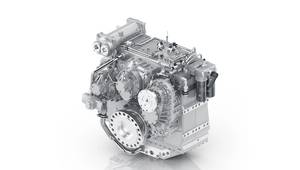
The AIBN said metallurgical examinations through x-ray scans had strengthened its belief that the failure took place in the gearbox.
"At this stage of the investigation, the AIBN finds that the accident most likely was the result of a fatigue fracture in one of the second stage planet gears," the report said. "What initiated the fatigue fracture has not yet been determined."
Two other scenarios had also been investigated, but neither appeared to have caused the crash, the AIBN added.
"It is considered unlikely that (the) fatigue crack propagated as a consequence of a structural break-up of another component," it said.
The helicopter that crashed was operated by Canada-based group CHC Helicopter. Investigators have previously ruled out human error, saying the crash was caused by a technical fault.
Previous Super Puma incidents linked to gearbox problems included a 2009 crash off Peterhead, Scotland, in which the rotor also flew off and 16 people died.
(Reporting by Terje Solsvik; Editing by Gareth Jones)