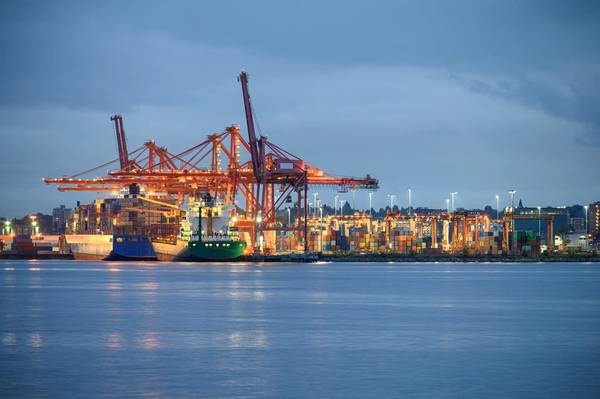
The port of Vancouver, Canada's largest, said on Tuesday that all rail access had been cut by floods and landslides further to the east, a development that could hit shipments of grain, coal and potash.
The Globe and Mail newspaper said a mudslide had swept cars off the road near Pemberton, some 100 miles (160 kilometers) to the northeast of Vancouver, killing an unspecified number of people.
"There were some fatalities that were discovered," it reported, citing local search and rescue manager David MacKenzie as saying.
MacKenzie and British Colombia police did not immediately respond to Reuters requests for comment.
Two days of torrential rain in the Pacific province of British Columbia triggered major flooding and shut rail routes operated by Canadian Pacific Rail and Canadian National Railway, by far the country's two biggest rail companies.
"All rail service coming to and from the Port of Vancouver is halted because of flooding in the British Columbia interior," said port spokesperson Matti Polychronis.
The floods have also closed numerous highways, including all main routes to Vancouver, she said. Provincial authorities are due to brief media at 6:30 p.m. EST (2330 GMT).
In Ottawa, Prime Minister Justin Trudeau said his Liberal government was very concerned about the flooding and would provide any help it could.
Vancouver's port moves C$550 million ($440 million) worth of cargo each day, ranging from automobiles and containerized finished goods to essential commodities.
The floods temporarily shut down much of the movement of wheat and canola from Canada, one of the world's biggest grain exporters.
Del Dosdall, senior export manager at grain handler Parrish & Heimbecker, said he expected some rail service could be running by the weekend, although another industry source said he expected the shutdown to last weeks.
Evacuations and rescue missions
Directly to the south of British Columbia, in Washington state, heavy rains forced evacuations and cut off electricity for over 150,000 households on Monday. The National Weather Service on Tuesday issued a flash flood in Mount Vernon, Washington, "due to the potential for a levee failure."
Some areas of British Columbia received 8 inches (200 mm) of rain on Sunday, the amount that usually falls in a month.
Authorities in Merritt, some 120 miles (200 km) northeast of Vancouver, ordered all 8,000 citizens to leave on Monday as river waters rose quickly, but some were still trapped in their homes on Tuesday, said city spokesman Greg Lowis.
Snow blanketed the town on Tuesday and some cars could be seen floating in the flood waters, which in some parts were still 4 feet high.
The towns of Chilliwack and Abbotsford on Tuesday ordered partial evacuations.
Rescuers equipped with diggers and dogs started dismantling large mounds of debris that have choked highways.
The landslides and floods come less than six months after a wildfires gutted an entire town, as temperatures in the province soared during a record-breaking heat dome.
The storms forced the closure of the Trans Mountain pipeline, which takes crude oil from Alberta to the Pacific Coast. The line has a capacity of 300,000 barrels per day.
(Reporting by Artur Gajda in Merritt and Rod Nickel, additional reporting by David Ljunggren, Nia Williams, Ismail Shakil and Brad Brooks; editing by Ed Osmond, Jonathan Oatis and Aurora Ellis)