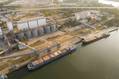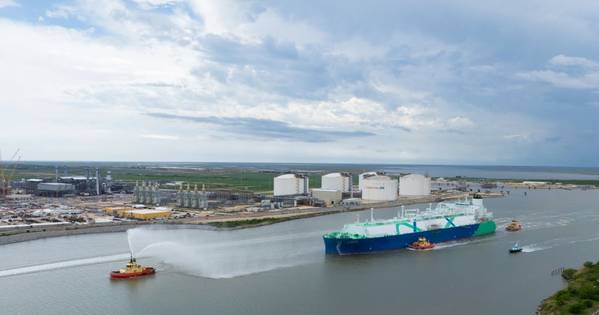
Golden Pass LNG, a joint venture between QatarEnergy and U.S. oil major Exxon Mobil, said on Wednesday that the first cargo of liquefied natural gas has departed from its new Sabine Pass terminal in Texas.
Shipping data showed that the vessel, Al Qa'iyyahal, had departed but it was not immediately apparent where the first shipment was headed.
Reuters previously reported it was expected to go to Italy to make up for some of the contracted LNG QatarEnergy has not been able to deliver because of the U.S.-Israeli war with Iran.
"As we advance toward full commercial operations, we are proud to have commenced supplying reliable U.S. LNG to the global market," Alex Savva, CEO of Golden Pass, said in a statement.
The inaugural shipment comes seven years after construction on the $10 billion plant began. Only the first train - or processing unit - is operating of an eventual three that will have a combined annual capacity of 18 million metric tons.
Trains 2 and 3 are still under construction and are expected to come online following stable operation of Train 1, Golden Pass said in a statement.
(Reuters - Reporting by Curtis Williams and Sheila Dang in Houston; Editing by Nathan Crooks and Nia Williams)