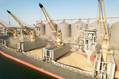
The Environmental Protection Agency (EPA) is proposing air emission standards for new marine diesel engines with per cylinder displacement at or above 30 liters (called Category 3 marine diesel engines) installed on US vessels. The proposed standards are equivalent to the nitrogen oxides (NOx) limits recently adopted in the amendments to MARPOL Annex VI. The near-term standards for newly-built engines would apply beginning in 2011. Long-term standards would begin in 2016 and are based on the application of high-efficiency after treatment technology. The EPA is also proposing a change to its diesel fuel program that would forbid production and sale of marine fuel oil above 1,000 ppm sulfur for use in waters within the proposed US emissions control area (ECA) and internal US waters and allow for production and sale of 1,000 ppm sulfur fuel oil for use in Category 3 marine vessels. The EPA further notes that if the proposed US ECA is not timely adopted by the IMO, it intends to take supplemental action to control emissions from vessels affecting US air quality. Comments on the proposal should be submitted by September 28. 74 Fed. Reg. 44441 (August 28, 2009).
(Source: Bryant’s Maritime News)