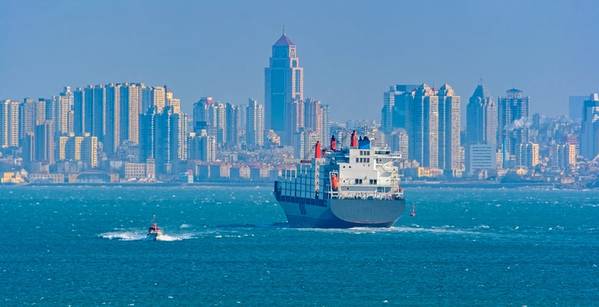
China's eastern port city Qingdao is experiencing the worst ever algae infestation in the region, with more than 1,700 square km of coastal area blanketed by harmful green seaweed, also known as "green tide."
Qingdao has suffered from algae for 15 years. It normally appears from late spring and lasts for three to four months, damaging the local marine ecosystem as algae take oxygen from other organisms and churn out toxic odors while decaying.
More than 1 million tonnes of algae are expected to be removed from coastal waters, state-backed China News reported on Monday, citing an expert from the Institute of Oceanology at Chinese Academy of Sciences (IOCAS).
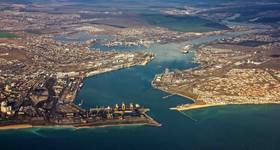
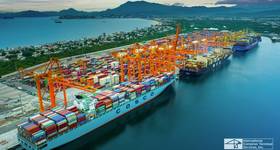
Qingdao city authorities had dispatched over 12,000 vessels to collect some 450,000 tonnes of algae by last week. Operations at Qingdao port, a major oil transporting hub, have not been affected by the algae so far.
The algae floating in Qingdao mainly comes from the Subei shoal, a shallow area off the coast of northern Jiangsu province, said Yu Rencheng, a researcher from IOCAS. Since at least 2006, China's central government, coordinating with the eastern province in Shandong, where Qingdao is located, and Jiangsu, had launched a campaign against the algae explosion and invested 1.99 billion yuan ($307.24 million) in 2018-2019 to support marine environmental protection.
But the algae still comes each year when the temperature climbs to a level that encourages its growth. Experts have previously said the explosion of algae follows intensive farming of seaweed in the nearby region and increasing organic matter such as nitrogen and phosphorus coming from fertilizers and residential sewage washed into the sea.
"The scale of the green has declined to a certain extent after a few years of control from the source in northern Jiangsu. But it is still relatively difficult to completely solve the problem in a short time," said Yu.
The table below shows previous algae infestations in China's Yellow Sea region tracked by the Ministry of Natural Resources.
| Year | First time detected by vessels | Time of disappearance | Maximum area covered (square km) |
| 2011 | mid-April | late-August | 560 |
| 2012 | late-March | late-August | 267 |
| 2013 | mid-to-late-March | mid-August | 790 |
| 2014 | early-April | mid-August | 540 |
| 2015 | mid-April | early-August | 594 |
| 2016 | mid-April | early-August | 554 |
| 2017 | mid-April | mid-to-late-July | 281 |
| 2018 | late-April | mid-August | 193 |
| 2019 | late-April | early-September | 508 |
| 2020 | early-April | late-July | 192 |
($1 = 6.4771 Chinese yuan renminbi) (Reporting by Muyu Xu and Shivani Singh; editing by David Evans)