marine link image
Register now for the Port of the Future Conference • 2 Days, 50 Ports • Houston/Galveston area, TX • April 12–14, 2027

Baltic Index Edges Up

February 11, 2021

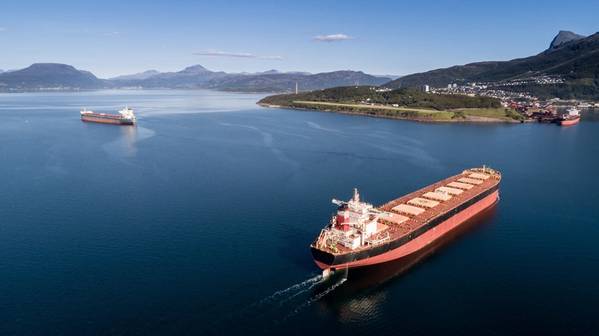
© Zdenar Adamsen / Adobe Stock

The Baltic Exchange's main sea freight index on Thursday gained after posting losses in the last three sessions, as strong gains in panamax and supramax vessel rates countered a slide in the capesize segment.

The Baltic dry index, which tracks rates for capesize, panamax and supramax vessels ferrying dry bulk commodities, rose 10 points, or 0.8%, to 1,313.

The capesize index dropped 53 points, or 4.1%, to an over two-month low of 1,243. The index slipped for a 16th consecutive session.

Average daily earnings for capesizes, which typically transport 150,000-tonne cargoes such as iron ore and coal, fell $437 to $10,312.

The panamax index was up 74 points, or 4.1%, at 1,871, a peak since mid-October, 2019.

Average daily earnings for panamaxes, which usually carry coal or grain cargoes of about 60,000 tonnes to 70,000 tonnes, rose $666 to $16,838.

The supramax index added 22 points to 1,197, its highest level since Oct. 24, 2019.


(Reporting by Bharat Govind Gautam; Editing by Vinay Dwivedi)

Logistics News

A Ceasefire Would Allow Russia to Restart 80% of Black Sea Grain Export Terminals

A Ceasefire Would Allow Russia to Restart 80% of Black Sea Grain Export Terminals

Aderco's 2055G+: Emissions Performance with Shared, Verifiable Data

Aderco's 2055G+: Emissions Performance with Shared, Verifiable Data

ARC Freedom Enters ARC's U.S.-Flagged Fleet

ARC Freedom Enters ARC's U.S.-Flagged Fleet

NYK Contributes to Industry Insight on Ammonia-Fueled Vessels at IMO

NYK Contributes to Industry Insight on Ammonia-Fueled Vessels at IMO

Subscribe for Maritime Logistics Professional E‑News

Maguire: Rapid EV adoption in the US fuel market has caused a split.
Sources say that traders are pushing for lower prices for Venezuelan crude oil, as shipping costs have risen.
Study finds that global biofuel production will increase by nearly 70% in 2030 as a result of the Gulf energy crisis