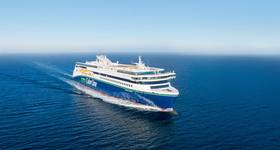
The American/British-owned German cruise line AIDA Cruises announced that it is planning the first practical trial of fuel cells (battery power) aboard an AIDA ship by 2021.
The trial will take place in cooperation with Meyer Werft within the scope of the ‘Pa-X-ell 2’ project promoted by Germany’s Federal Ministry of Transport and Digital Infrastructure.
The German brand of Carnival Corporation said in a press note that it has been focusing for many years in research into and the use of alternative propulsion technologies and environmental technology together with its global partners.
As part of its Green Cruising Strategy, for instance, AIDA is exploring the possibility of CO2-free production of liquefied gas from renewable sources ("Power to gas" project) or the use of fuel cells and batteries for cruise ships, it said.
The use of low-sulfur fuels has already been a reality in many of AIDA Cruises travel regions for years, the cruiseliner added.
In the North Sea, the Baltic Sea, off the coasts of North America and in all other ECA-regions worldwide, AIDA Cruises utilizes low-sulfur fuel containing at most 0.1% sulfur. In all European ports, the engines of AIDA ships have been only using fuel containing a maximum of 0.1% sulfur for almost a decade now.