Training toward Greater Maritime Security
Posted by Eric Haun
April 7, 2016
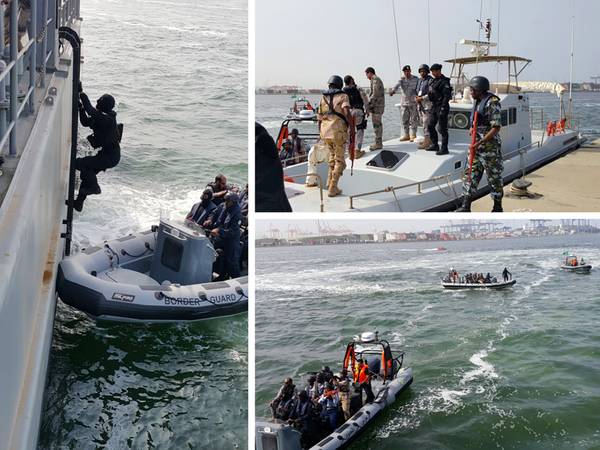
Photo: IMO
Extensive maritime security training involving countries operating under the Djibouti Code of Conduct (DCoC) has taking place from March 20-April 7 in Jeddah, Saudi Arabia.
Maritime law enforcement officials from 17 DCoC signatory States (the Comoros, Djibouti, Egypt, Ethiopia, Jordan, Kenya, Madagascar, Maldives, Mauritius, Mozambique, Oman, Saudi Arabia, Seychelles, Somalia, South Africa, the Sudan, the United Arab Emirates) participated in exercises dealing with transnational organized crimes at sea – including, piracy/armed robbery against ships, drug trafficking, marine terrorism, weapons smuggling and human trafficking. The training covered theory and hands-on practical training in conducting criminal investigations at sea, boarding and searching suspected vessels, collection, handling and preservation of evidence at sea.
The course was based on best practices and recognized international standards and delivered by experts from International Maritime Organization (IMO), the U.S. Coast Guard and Naval Criminal Investigative Service (NCIS), NATO Maritime Interdiction Operations Training Centre (NMIOTC), Greece and Saudi Arabia Border Guard.
The training was jointly organized by Saudi Arabia and IMO and was officially launched by the Director General of Saudi Arabia Border Guard, Admiral Awwad Eid Al-Balawi and IMO representative Kiruja Micheni.