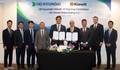
APM Terminals Maasvlakte II (MVII), in Rotterdam, will equip its terminal with shore power from 2028, providing seagoing vessels with clean energy while in port. To make this possible, the APM Terminals has signed an agreement with Rotterdam Shore Power, a partnership between the Port of Rotterdam Authority and Eneco.
The 2028 target date is well in advance of the European regulations requiring shore power for container ships by 2030. Connecting the vessels to the power grid at APM Terminals MVII, will reduce CO2 emissions by almost 7,000 tonnes each year. It will also reduce nitrogen and particulate emissions. Vessels will use a total of about 13,000 MWh at the terminal annually.
"Offering shore power to our clients is the next logistical step in our global ambition to minimize emissions in the maritime sector," staid Harold Kunst, CEO of APM Terminals MVII. "This collaboration with Rotterdam Shore Power is a significant step in our joint ambition to make the port of Rotterdam a global pioneer in the field of sustainability."
"With this collaboration, we are adding a third deep-sea terminal to our shore power portfolio," directors Ina Barge and Tiemo Arkesteijn said. "This is a significant step in making the port of Rotterdam sustainable and reducing emissions."
"Shore power is an effective way to reduce shipping emissions and also ensures that ships at the quay do not make noise," said Brigit Gijsbers, Deputy Director-General for Aviation and Maritime Affairs at the Ministry of Infrastructure and Water Management. "It is great to see that the Port of Rotterdam is once again taking a significant step towards making the port more sustainable."
APM Terminals MVII is already a CO2 emission-free terminal, with buildings and areas that are energy efficient and environmentally friendly. Most of the equipment used there contributes to its sustainable character, including fully electric Lift Automated Guided Vehicles (L-AGVs). These vehicles, which transport containers, run on green energy generated by wind power and ensure minimum noise pollution.