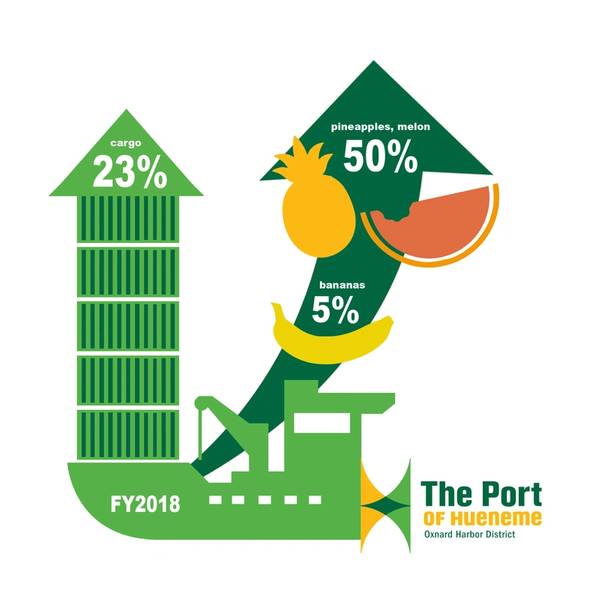
Cargo imports and exports hit an all-time high at the Port of Hueneme with 1.6 million tons of cargo moving through the Port. This represents an 8.1% increase over last year’s performance of 1.48 million cargo tons. The previous cargo record was set in FY2015 with 1.56 million cargo tons.
This new cargo record resulted from increases in nearly all areas of cargo imports and exports. Pineapples and melons rose a staggering 50%. Banana imports increased by 5%. “A 5% increase in banana imports may not sound like a big deal, but when you take into account that we import over 3.3 billion bananas a year, that percentage increase can make a significant impact on our overall cargo tonnage,” explained Oxnard Harbor District Commissioner Jason Hodge. “And we’ve done this all while leading the industry in environmental initiatives and being named the Greenest Port in the United States.”
The Port serves as the West Coast hub for the Chiquita, Del Monte and One Banana brands, along with exporting produce from several California grown companies. Since 2012, the Port’s cargo volume has increased by 23%, and an impressive 44% since the Great Recession in 2009.