The Port of Los Angeles recorded its lowest emissions per container on record in 2025, continuing a two-decade decline in air pollution even as container throughput remained near historic highs.
According to the port's newly released Inventory of Air Emissions, diesel particulate matter (DPM) emissions declined 2% in 2025 compared with 2024, while nitrogen oxides (NOx) fell 4%, sulfur oxides (SOx) decreased 5% and greenhouse gas emissions dropped 3%. The NOx reduction brought annual emissions to their lowest level since the port began tracking air pollution in 2005.
The improvements came as Los Angeles handled nearly 10.2 million twenty-foot equivalent units (TEUs), maintaining its position as the nation's busiest container port.
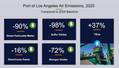
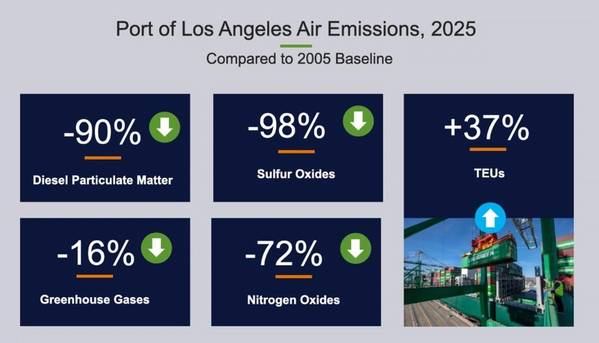
Since 2005, the port has reduced DPM emissions by 90%, NOx by 72%, SOx by 98% and greenhouse gases by 16%, while container volumes increased 37%.
Much of the progress reflects investments in cleaner vessels, cargo-handling equipment and landside transportation.
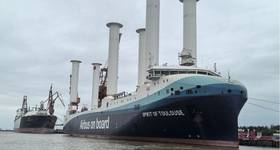
Ocean-going vessels have reduced DPM emissions by 94% and SOx by 98% since 2005, aided by cleaner fuels, shore power and emissions capture technologies.
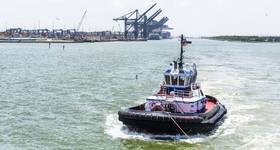
Harbor craft are also contributing. In 2025, 55% of tugs, barges, ferries and other workboats met Tier 3 or Tier 4 emissions standards, compared with 20% in 2017. Harbor craft DPM emissions have fallen 69% since 2005.
Electric cargo-handling equipment increased 20% during 2025, with zero-emission units now representing 14% of the port's equipment fleet. Meanwhile, truck-related DPM and NOx emissions declined 16% and 25%, respectively, year over year.
"These results demonstrate that we can move high cargo volumes while continuing to reduce emissions," said Port Executive Director Gene Seroka.
The findings reflect ongoing implementation of the San Pedro Bay ports' Clean Air Action Plan, including investments in zero-emission equipment, charging infrastructure and cleaner maritime operations.