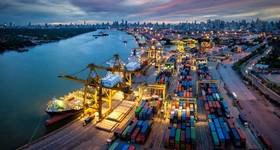
The El Nino climate phenomenon, not climate change, drove lower rainfall last year that reduced the Panama Canal's water levels and contributed to shipping restrictions that disrupted global trade, a study released on Wednesday found.
Prioritizing water for human consumption rather than for the canal also played a role in shipping restrictions, according to the study by research consortium World Weather Attribution.
Panama experienced its third-driest year on record in 2023, leading the canal authority to restrict the size and number of vessels crossing the waterway that connects the Atlantic and Pacific Oceans and serves as a vital route for maritime trade. At times, more than 100 ships at a time lined up and waited up to 21 days to use the canal, which is responsible for about 5% of global shipping.
Panama has faced demand peaks for the canal in recent months since shippers began seeking alternative routes due to attacks by Houthi militants against vessels going through the Red Sea toward the Suez Canal, the world's busiest waterway.
Scientists with World Weather Attribution, which analyzed the causes of the low rainfall, said that the canal should be able to return to normal operations this year as El Nino ends and the rainy season arrives as usual.
"We expect the canal system will be fully recharged by the end of the year and shipping should be back to normal sometime several months before then," said Steven Paton, a study co-author and researcher at the Smithsonian Tropical Research Institute in Panama.
The study concluded that it was El Nino, not climate change, that was the key driver for rainfall falling to 26% lower than average last year in Panama.
El Nino is a naturally occurring warming in the Eastern Pacific Ocean that disrupts weather patterns globally on average every two to seven years. The latest El Nino began in mid-2023.
Paton said El Nino has ended, with Australia's weather bureau making the same call last month. The U.S. National Oceanic and Atmospheric Administration has yet to say El Nino is over.
Water management was also a factor in the water levels, according to World Weather Attribution.
The canal's locks draw on a reservoir called Lake Gatun that also provides drinking water for half of Panama's population. Authorities decided to restrict ship traffic in 2023, rather than rationing drinking water as they did in 2016 following another drought, the study said.
(Reuters - Reporting by Jake Spring; Editing by Will Dunham)