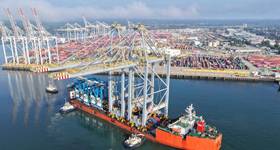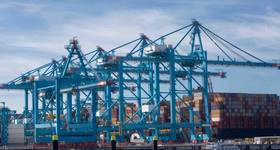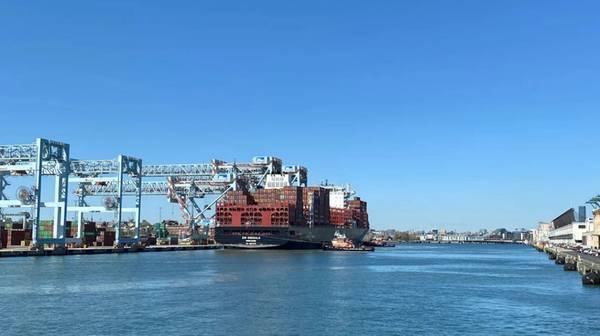
NOAA has installed a Physical Oceanographic Real-Time System (PORTS®) in Boston Harbor. The system includes observational equipment at MassPort’s Conley Terminal and on the Tobin Memorial Bridge.
The Boston Harbor PORTS, established in partnership with the Massachusetts Department of Environmental Protection, is the 41st installation in a broad, public-private partnership program, providing commercial and other vessel operators with accurate and reliable real-time information about environmental conditions to support safe navigation.
The Boston Harbor PORTS will consist of one current meter and one meteorological station that will collect wind, air temperature and barometric pressure data. The new PORTS is also slated to include the installation of a new air gap sensor at the Tobin Memorial Bridge over the Mystic River.
The sensor will provide real-time data on the amount of bridge clearance that is available to ships in an area where the tides can shift dramatically throughout the day. NOAA’s existing National Water Level Observation Network station at Boston Harbor will also be included in this newly established PORTS.
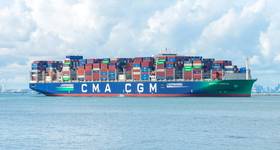
Growing ship size and increasing maritime traffic continue to present potential risks to maritime commerce and the coastal environment. NOAA’s PORTS systems mitigate those risks by integrating real-time environmental data and meteorological parameters with forecasts and other geospatial information. These systems have a proven track record of helping prevent collisions and groundings in ports across the nation, including in busy Boston Harbor.
“Boston Harbor PORTS will help mariners safely navigate shipping routes and make better, more efficient schedules supporting the resilience of our nation’s supply chain,” said Nicole R. LeBoeuf, director of NOAA’s National Ocean Service. “Through this effort, we will help support economic prosperity in the region while reducing risks to life, property and the coastal environment.”
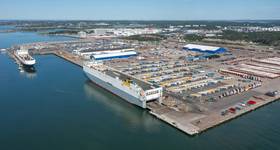
Boston has a rich maritime history, operating the nation’s oldest port, first established in the 1600s. Today, it is Massachusetts’ primary seaport, and the nation’s third busiest cargo port, handling more than 2.3 million tons annually. Conley is the only full-service container terminal in New England, connecting the Northeast to key global markets and tourism opportunities. The port also supports more than 66,000 jobs and generates billions of dollars in annual revenue for New England.