Navios Maritime Partners Growing With Panamax Vessels
By Aiswarya Lakshmi
January 25, 2018
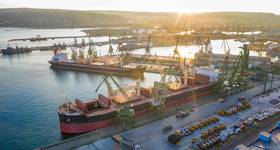
Greek owner and operator of dry bulk and container vessels Navios Maritime Partners has agreed to acquire two 2006-built Panamax vessels with a capacity of approximately 74,500 dwt each, for a total purchase price of USD 22 million.
The vessels are expected to be delivered to Navios Partners' owned fleet within Q1 2018.
Based on the existing charters of the vessels ($9,375 net per day until May/November 2018 and $9,844 until March/August 2018, respectively) and the current rate environment (Clarksons’ 1-year time charter rate for Panamax vessels as of January 19, 2018), the vessels are expected to generate approximately $4.8 million of EBITDA for the first year, assuming midpoint of redelivery from charterers, operating expenses approximating current operating costs and 360 revenue days.
Navios Partners is expected to finance the acquisition with cash on its balance sheet and $14.3 million bank debt maturing in 2023 and bearing interest at LIBOR plus 300 bps per annum.
Following this acquisition, Navios Partners controls 38 vessels.