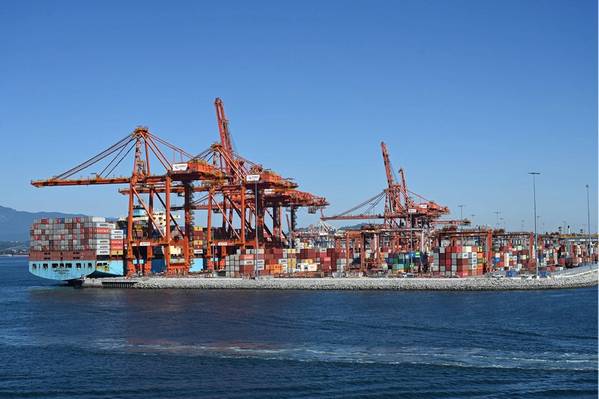
US freight forwarder C.H. Robinson said on Monday it was diverting some of its U.S. customers' ocean cargo away from Canadian ports as the threat of a rail strike looms.
It said roughly 80% of its customers who had switched are now exporting through Los Angeles/Long Beach ports and the rest through Seattle/Tacoma ports.
Canadian railroads, Canadian National and Canadian Pacific Kansas City, are bracing for a possible work stoppage by the Teamsters Canada Rail Conference Union.
"Now that a strike notice has been declared, some of our Canadian export customers are starting to ship time-sensitive goods to the ports by truck to avoid containers being stuck at rail terminals during a strike," C.H. Robinson's Canada VP Scott Shannon said in a statement to Reuters.
C.H. Robinson is lining up extra trucking capacity on both sides of the border, as volumes are expected to shift to highways following the disruption.
A strike, which could come as early as August 22, brings a level of uncertainty for shippers in both U.S. and Canada, forcing them to think about over-the-road options.
(Reuters - Reporting by Abhinav Parmar in Bengaluru; Editing by Tasim Zahid and Sriraj Kalluvila)