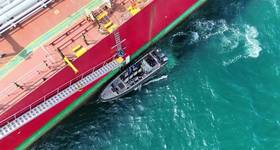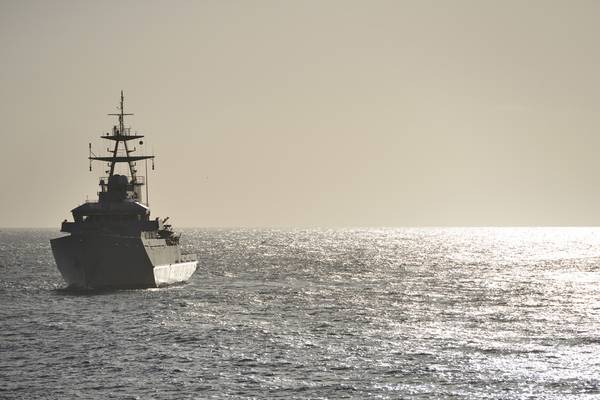
Britain does not intend to escort every British-flagged merchant vessel through the Strait of Hormuz, a security source said on Thursday, after a Royal Navy warship had to stop three Iranian vessels from blocking the passage of a BP-operated tanker.
The source said London would be resolute in defending its maritime interests in the Gulf but it does not want to escalate the situation with Iran.
Exactly a week after Britain seized an Iranian tanker in Gibraltar accused of violating sanctions on Syria, London said the British Heritage tanker operated by oil company BP had been approached in the Strait, the main outlet for Middle Eastern oil.
On any given day, about 15 to 30 large British-flagged ships travel through the Gulf, with up to three passing through the Strait of Hormuz. Britain has HMS Montrose and four mine countermeasure vessels in the Gulf.
With tensions rising in the area, Britain raised its ship security level on Tuesday to 3 - critical - the highest category, for British-flagged ships in Iranian waters.
Iran's Foreign Minister Mohammad Javad Zarif has dismissed as "worthless" the allegation that Iran had tried to block the ship.
By Guy Faulconbridge