In a webinar on Tuesday, May 17, 2022, Giles Candy will present the advantages for ship owners and shipbuilders with the Scienco InTank Ballast Water Treatment System.
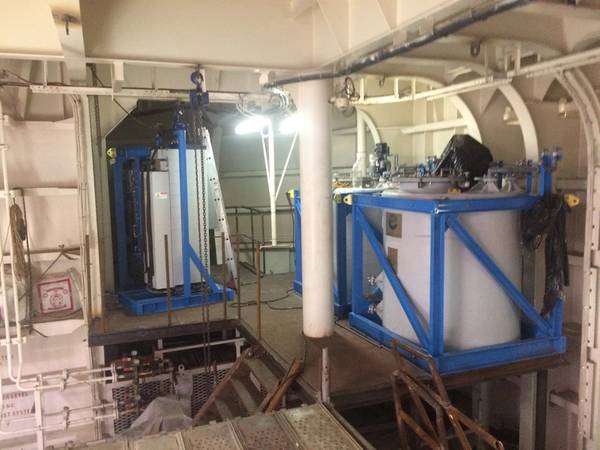
The Scienco InTank BWTS treats and neutralizes ballast water in the ballast tanks during the voyage, which allows for normal ballasting and de-ballasting operations in port. It is the only Type Approved “in voyage” ballast water treatment system.
A small percentage of ballast water is circulated from one ballast tank at a time. The active substance, Sodium Hypochlorite (NaOCl), is added to the circulation and returned to the tank. Sodium Hypochlorite is produced on board by an electro-chemical cell (EC), or from bulk-chemical storage (BC). The treatment is monitored using the TRO levels in the circulated ballast. Treatment is completed during the voyage, and neutralization is completed hours before discharge.
SIGN UP TODAY: Learn about the Scienco InTank BWTS operational advantages at a webinar at the time that works best for your schedule on May 17, 2022 (all times below are U.S. Central Time). Sign up today by clicking the time you would like to attend.
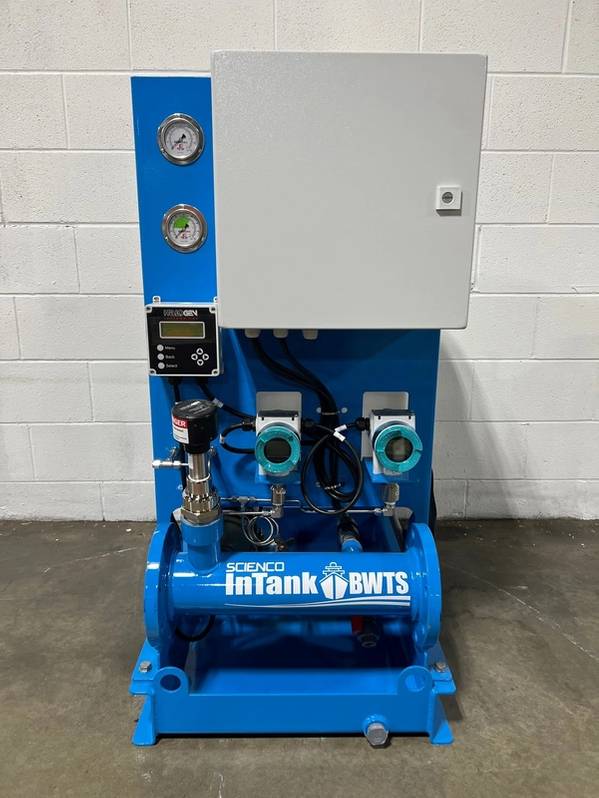 The Scienco InTank BWTS.