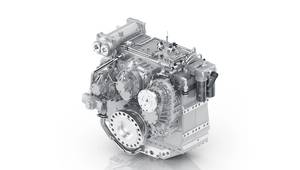
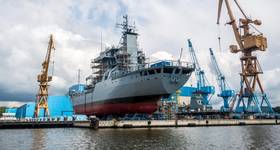
Eight Azipod C compact propulsion systems installed on 'Pacific Orca' and 'Pacific Osprey', the world’s largest wind farm installation vessels (WIV).
The Azipod systems were delivered to the Samsung Shipyard in Korea from ABB’s new Azipod factory in Shanghai, China, established in 2011 to build the low power Azipod units. The new plant focuses on production of CO and CZ Azipod units, which range between 1.3 - 4.5 megawatts (MW) and 3.3 - 4.7 MW output, respectively. The factory helps ABB to meet fast-growing demand for high-end vessels from Chinese shipyards and, at the same time, provide better service to key shipbuilding markets like Japan and South Korea. By September 2012, more than 20 Azipod C units had been delivered from the Shanghai factory.
In 2011, ABB delivered four Azipod units for the Pacific Orca, and in 2012, another four were ordered for the Pacific Osprey. The Pacific Osprey will be delivered to Singapore-based, offshore oil and gas industry service provider, Swire Pacific Offshore Operation (Pte) and will be deployed in 2013 in the North Sea Dan Tysk Offshore Wind Farm. This new ship will replace the Pacific Orca, which will be redeployed to serve the Danish utility, DONG Energy.
ABB’s compact marine propulsion system, Azipod C, saves space onboard the vessel for more efficient ship design and equipment placement, key considerations for “jack-up” WIVs like the Pacific Orca. Azipods help to improve maneuverability and can reduce a vessel’s fuel consumption by up to 25 percent.
The Azipods delivered to the Samsung Shipyard will propel the 161 meter-long vessels (49 meter beam) at speeds in excess of 13 knots, while carrying up to twelve 3.6 MW turbines. The Azipods enable the ship to be maneuvered very precisely, allowing the vessel to be raised up on six sets of truss legs in waters up to 75 meters deep.