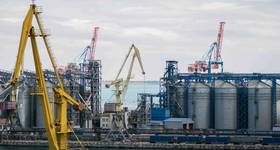
The Energy Department announced it has conditionally authorized Lake Charles Exports, LLC (Lake Charles) to export domestically produced liquefied natural gas (LNG) to countries that do not have a Free Trade Agreement (FTA) with the United States from the Lake Charles Terminal in Lake Charles, Louisiana. Lake Charles previously received approval to export LNG from this facility to FTA countries on July 22, 2011. Subject to environmental review and final regulatory approval, the facility is conditionally authorized to export at a rate of up to 2 billion cubic feet of natural gas a day (Bcf/d) for a period of 20 years. The Department granted the first authorization to export LNG to non-FTA countries in May 2011 from the Sabine Pass LNG Terminal in Cameron Parish, Louisiana at a rate of up to 2.2 Bcf/d, and the second authorization in May 2013 from the Freeport LNG Terminal in Quintana Island, Texas at a rate of up to 1.4 Bcf/d.
The development of U.S. natural gas resources is having a transformative impact on the U.S. energy landscape, helping to improve our energy security while spurring economic development and job creation around the country. This increase in domestic natural gas production is expected to continue, with the Energy Information Administration forecasting a record production rate of 69.96 Bcf/d in 2013.
Federal law generally requires approval of natural gas exports to countries that have an FTA with the United States. For countries that do not have an FTA with the United States, the Natural Gas Act directs the Department of Energy to grant export authorizations unless the Department finds that the proposed exports “will not be consistent with the public interest.”
The Energy Department conducted an extensive, careful review of the application to export LNG from the Lake Charles LNG Terminal. Among other factors, the Department considered the economic, energy security, and environmental impacts - as well as public comments for and against the application and nearly 200,000 public comments related to the associated analysis of the cumulative impacts of increased LNG exports – and determined that exports from the terminal at a rate of up to 2 Bcf/d for a period of 20 years was not inconsistent with the public interest.
energy.gov