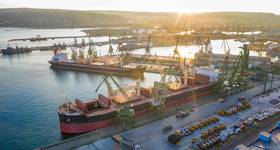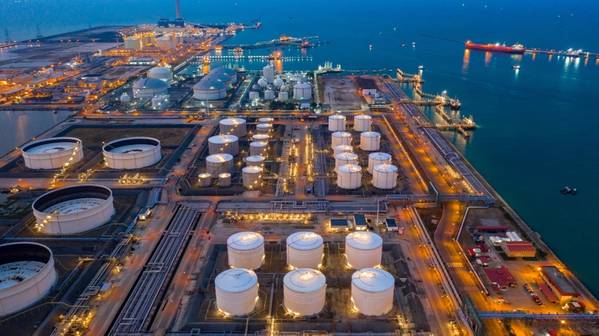
One of Turkey's mid-sized Mediterranean oil terminals - the Dortyol terminal - will no longer accept Russian imports after receiving record volumes last year, amid an increase in sanctions pressure by the United States.
Turkey has become one of the biggest importers of Russian crude and fuel since 2022, after the West imposed sanctions on Moscow for the invasion of Ukraine. Russia responded by re-routing oil away from Europe and the U.S. to Asia, Turkey and Africa.
Global Terminal Services' (GTS), which operates the terminal in Turkey's southeastern Hatay province, said it had told its clients it would not accept any products from Russia.
"GTS decided to cut all possible connections to Russian oil and declared accordingly to its customers in late February 2024 that even if there is no breach of any laws, regulations or sanctions, it would not accept any product of Russian origin or any products loaded from Russian ports as an additional measure to the sanction rules in effect," GTS told Reuters.
It said that all pervious operations had been in full compliance with sanctions including the G7's price cap.
"GTS's new approach is an additional measure to eliminate the effects of activities that are beyond its reach and control despite the efforts to comply with all applicable sanctions," GTS added.
A U.S. threat to hit financial firms doing business with Russia with sanctions has already chilled Turkish-Russian trade, disrupting or slowing some payments for both imported oil and Turkish exports.
The GTS Terminal - which imports, exports, and stores fuel and crude - received 11.74 million barrels of Russian crude oil and fuel last year, data from shipping analytics firm Kpler show.
It became Turkey's seventh largest import terminal by volume, rising from No.10 in 2021. Its 2023 Russian crude and fuel imports were around seven times higher than the total volume it received from all origins in 2021, the last full year before Russia's invasion of Ukraine.
Exports from the terminal also jumped in 2023, increasing almost fivefold from 2021, to around 24.7 million barrels, according to Kpler.
The last tanker to discharge at Dortyol arrived on Feb. 19, delivering a 511,000 barrel diesel cargo from the Russian Baltic port of Primorsk, Kpler data showed.
GTS said it would still accept Russian cargoes that had been nominated before the ban took place in late-February.
Common destinations for oil exported from Dortyol included the Greek ports of Corinth, Elefsis and Thessaloniki, and the Northwest European oil trading, refining and storage hubs of Rotterdam and Antwerp.
Ankara opposes Western sanctions on Moscow, despite criticising Russia's invasion of Ukraine two years ago. It has managed to maintain close ties with both Moscow and Kyiv throughout the conflict.
(Reuters - Reporting by Robert Harvey in London and Can Sezer in Istanbul, editing by Dmitry Zhdannikov and David Evans)