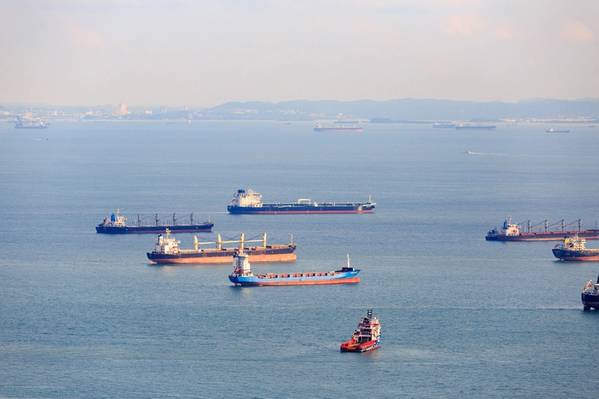
Singapore's port authority will provide S$6 million ($4.5 million) to help build two liquefied natural gas (LNG) bunker vessels, in a bid to promote ship-to-ship LNG bunkering in the city-state.
FueLNG, a joint venture between Keppel and Shell Eastern Petroleum, and Pavilion Gas will each receive a S$3 million co-funding grant for the vessels due for delivery in 2020, the Maritime and Port Authority of Singapore (MPA) said on Monday.
The move is part of Singapore's push to maintain its status as leading ship refueling hub in the region.
"LNG is a viable marine fuel solution to meet global environmental regulations such as the International Maritime Organization's (IMO) 0.5 percent global sulfur cap from January 1, 2020," Andrew Tan, chief executive of MPA said.
Coming IMO rules will slash the amount of sulfur emissions that ships worldwide are allowed to burn, with ship owners looking at a range of solutions to meet the new regulations.
($1 = 1.3371 Singapore dollars)
(Reporting by Jessica Jaganathan; editing by Richard Pullin)