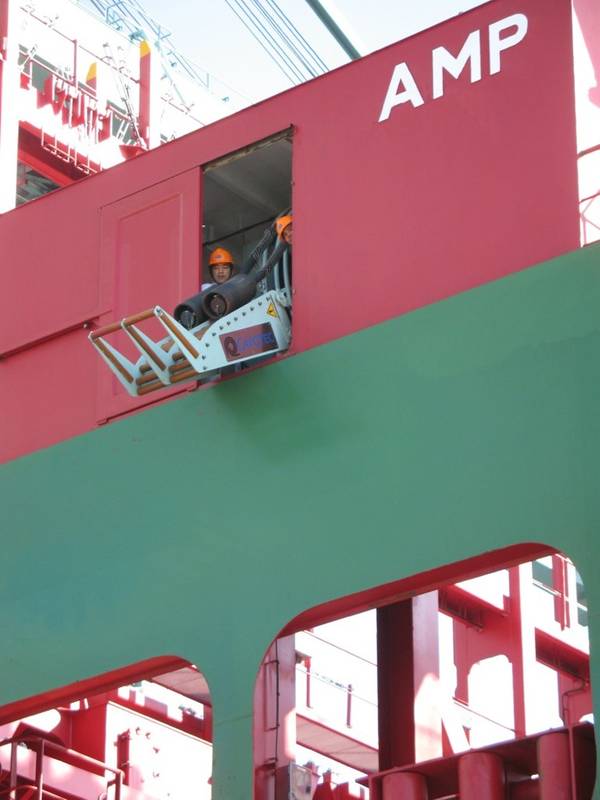
Come Jan. 1, 2014, the maritime industry in California faces a looming reality: ships must link up to port alternative maritime power (AMP).
“Compliance is not optional,” said T.L. Garrett, vice president of Pacific Merchant Shipping Association.
Garrett’s group represents the majority of international shipping lines and terminal operators doing business on the West Coast; most of them will be impacted by state rules to go into effect next year mandating the use of shore power for container, reefer and cruise ships.
At least 50 percent of an ocean carrier’s fleet of container, reefer and cruise ships calling at six California ports must plug into shore power at berth. Fleets calling at these ports – Long Beach, Los Angeles, San Diego, Oakland, San Francisco and Hueneme – also must reduce their emissions by 50 percent.
“We know this is a major shift,” said Renee Moilanen of the Port of Long Beach’s Environmental Planning Division. “We’re doing everything we can to ready the Port and keep vessel operators informed.”
There are two reasons the shift is necessary. Ships are the single largest source of air pollution from port-related operations, and plugging into landside electricity eliminates 95 percent of vessel emissions at berth.
Meanwhile, a 2013 deadline is looming: by July 1, shipping lines must submit a vessel compliance plan to the governing agency, the California Air Resources Board (CARB), for each port where the targeted vessels call. Likewise, terminal operators have until July 1 to submit updates of terminal compliance plans they were required to file in 2009.