If Iran's oil exports are cut to zero, international waterways will not have the same security as before, its president said on Wednesday, cautioning Washington against upping pressure on Tehran in an angry confrontation between the longtime foes.
The comment by President Hassan Rouhani coincided with a remark by Iranian Foreign Minister Mohammad Javad Zarif that Tehran might act "unpredictably" in response to "unpredictable" U.S. policies under President Donald Trump.
"World powers know that in the case that oil is completely sanctioned and Iran's oil exports are brought down to zero, international waterways can't have the same security as before," Rouhani said while meeting Supreme Leader Ayatollah Ali Khamenei, according to Khamenei's official website.
"So unilateral pressure against Iran can't be to their advantage and won't guarantee their security in the region and the world."
Tensions between Tehran and Washington have risen since Trump's administration last year quit an international deal to curb Iran’s nuclear ambitions and began to ratchet up sanctions. Iranian officials have denounced the new penalties as "economic warfare".
In a speech at the Stockholm International Peace Research Institute (SIPRI), Zarif appeared to echo Rouhani's tone.
"Mutual unpredictability will lead to chaos. President Trump cannot expect to be unpredictable and expect others to be predictable. Unpredictability will lead to mutual unpredictability and unpredictability is chaotic," Zarif said.
Global commodity trading has been rocked in recent months after a series of attacks on international merchant vessels, which the United States has blamed on Iran, and the seizure of a British tanker. Tehran has denied the accusations.
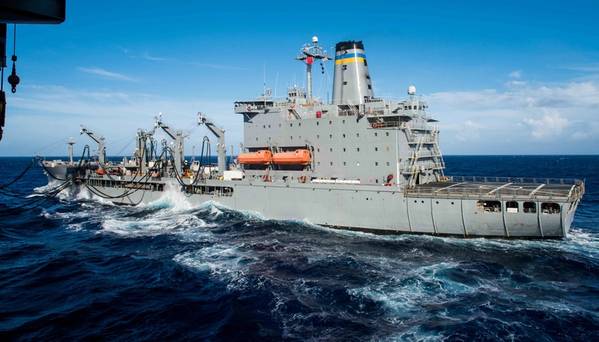
Washington, which has by far the strongest Western naval contingent in the Gulf, has been calling for its allies to join it in an operation to guard shipping in the Strait of Hormuz, a vital gateway for the world’s oil industry.
So far, Britain, Australia and Bahrain have joined the U.S.-led security mission to protect merchant vessels travelling through key Middle East waterways.
Reiterating Iran's chilly response to the security mission, Iranian Rear Admiral Ali Fadavi, a deputy commander of the elite Revolutionary Guards, said no one can secure the Gulf other than Iran and countries of the region, according to the semi-official Fars news agency.
"Securing the Persian Gulf is the responsibility of Iran and the countries of the region," Fadavi said. "Other than us, no one can secure the Persian Gulf."
Reporting By Babak Dehghanpisheh