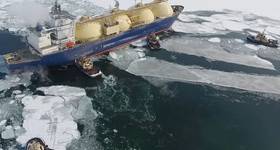
South Korea shipbuilder Samsung Heavy Industries (SHI) may receive an order from Russia’s largest independent gas producer Novatek for 10 additional ice-breaking LNG carriers worth US$3Bn.
A report by Business Korea said Novatek has asked the Russian Government to approve its plan to place an order at an “overseas shipyard”.
If the Russian government approves the scheme, the number of LNG carriers to be used for Russia’s Arctic LNG project will increase to 25, including the 15 units that will be built by Zvezda, a state-run Russian shipyard, the report said.
The Russian government earlier allowed Zvezda to build the 15 units jointly with a foreign partner, which is required to transfer its technology to the Russian shipbuilder.
A contract for an initial pilot vessel for the project has been signed with Zvedza Shipyard, which has a technology transfer partnership with SHI. Built to Russian Register Arc7 for year-round operation in second-year ice with old ice inclusions with a thickness of 2.5 m, the initial vessel is expected to be delivered in Q1 2023.
If Samsung Heavy Industries succeeds in landing the entire icebreaking LNG carrier order for the second Yamal Project, the shipbuilder’s total orders for icebreaking LNG carriers are expected to hit US$8 billion (approximately 9.34 trillion won). This amount exceeds the shipbuilders order target of US$7.8 billion for 2019.