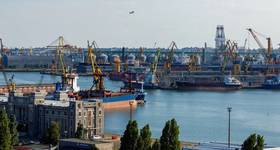
Diana Shipping announced that, through a separate wholly-owned subsidiary, it has entered into a time charter contract with Phaethon International Company AG, for one of its Panamax dry bulk vessels, the m/v Ismene.
According to a press note from the global shipping company specializing in the ownership of dry bulk vessels, the gross charter rate is US$10,800 per day, minus a 5% commission paid to third parties, for a period of minimum 13 months to about fifteen 15 months.
The charter is expected to commence on January 11, 2020, it said.
The “Ismene” is a 77,901 dwt Panamax dry bulk vessel built in 2013.
"This employment is anticipated to generate approximately US$4.21 million of gross revenue for the minimum scheduled period of the time charter," said the release.
Upon completion of the previously announced sale of one Panamax dry bulk vessel, the m/v Calipso, Diana Shipping Inc.’s fleet will consist of 41 dry bulk vessels (4 Newcastlemax, 14 Capesize, 5 Post-Panamax, 5 Kamsarmax and 13 Panamax).
As of today, the combined carrying capacity of the company’s fleet is approximately 5.2 million dwt with a weighted average age of 9.56 years.